AC sizing for your Texas City home demands precision. You want optimal comfort and efficiency, not an oversized unit that short-cycles and leaves your home humid, nor an undersized one that constantly struggles. Properly sizing your AC unit ensures you achieve ideal indoor climate control, saving you money and enhancing your comfort.
The Unique Climate Challenges of Texas City
Texas City’s distinct Gulf Coast climate presents unique challenges for home cooling. You need an AC system that can effectively combat not only intense heat but also pervasive humidity. Your system’s ability to perform efficiently in these conditions directly impacts your comfort and energy bills. Understanding these local factors helps you appreciate the importance of professional AC sizing.
High Humidity Levels in the Gulf Coast Region
The Gulf Coast air carries a significant amount of moisture, making proper dehumidification a priority. An AC unit must actively remove this humidity to prevent your home from feeling clammy. When an AC is too large, it cycles off before adequately addressing the moisture, leaving you feeling sticky. This leads to higher thermostat settings just to feel comfortable.
Extreme Summer Temperatures and Heat Indexes
Texas City summers bring scorching temperatures that demand a powerful cooling solution. The heat index, which combines air temperature with humidity, often makes it feel even hotter. Your AC system needs to be able to consistently battle these extreme conditions without overworking itself. An undersized unit will run constantly, struggling to maintain a comfortable indoor temperature.
| Extreme Summer Temperatures in Texas City | |
|---|---|
| Average Summer Temperatures | Frequently in the 90s°F (30s°C) |
| Heat Index Impact | Can make it feel over 100°F (38°C) |
Warm air seeps into your home through various points, requiring your AC to work tirelessly. Your system must have the capacity to handle this constant thermal load, especially during peak afternoon heat. A properly sized unit will cool your home effectively and efficiently, providing relief from the oppressive outdoor conditions without excessive energy consumption.
The Impact of Saline Air on HVAC Component Longevity
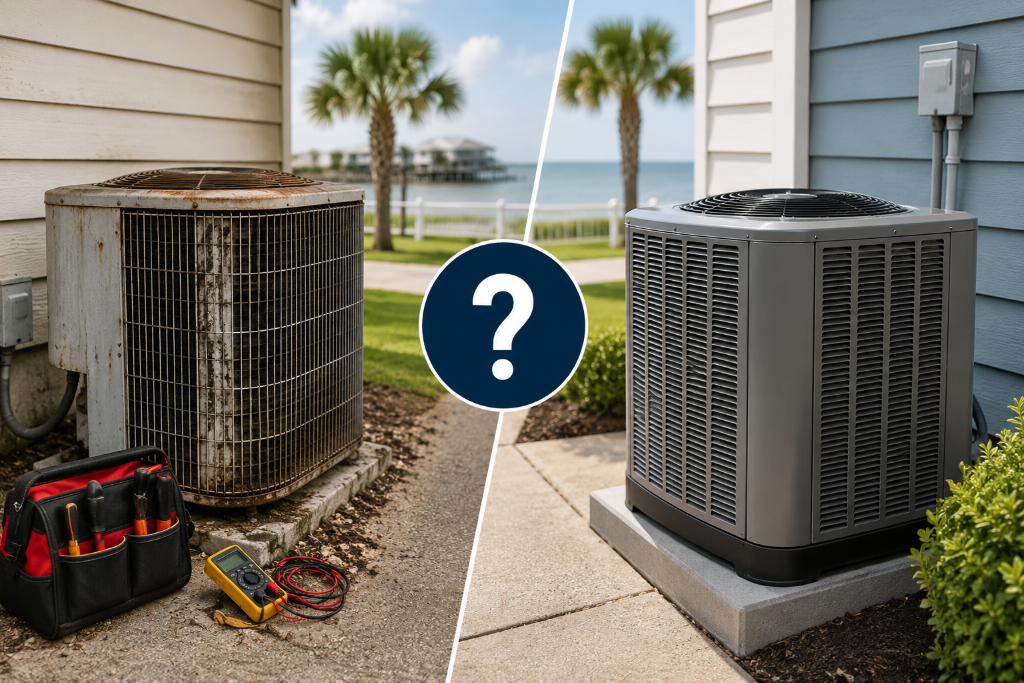
Living near the coast exposes your HVAC system to saline air, which can accelerate corrosion. This corrosive environment can shorten the lifespan of your outdoor unit’s components. You should consider materials and protective coatings when selecting a new system. Investing in a unit designed for coastal conditions can save you significant repair costs down the line.
| Saline Air Impact on HVAC | |
|---|---|
| Corrosion Risk | Accelerated wear on metal components |
| System Lifespan | Can reduce the operational life of units |
Exposure to salt-laden air causes rust and deterioration, particularly on condenser coils and electrical connections. Your HVAC contractor can recommend systems with features like coated coils or specialized cabinet materials that offer enhanced resistance to this corrosive element. This proactive approach helps protect your investment and ensures your AC continues to perform reliably for years in the Texas City environment.
What Happens If Your AC Is Too Large
Selecting an air conditioner that is too powerful for your Texas City home can lead to unexpected problems. You might assume a larger unit means better cooling, but the reality is quite different.
An oversized AC unit often cools your living space too rapidly, failing to address a critical aspect of comfort in our humid climate. This quick cooling without adequate dehumidification creates a host of issues you’ll want to avoid.
The Issue of Short-Cycling and Mechanical Wear
Your oversized AC will turn on, cool the house quickly, and then shut off almost immediately. This frequent on-off pattern is known as “short-cycling.”
Short-cycling puts immense stress on your system’s components, particularly the compressor. This accelerated wear and tear can significantly shorten the lifespan of your expensive equipment, leading to premature breakdowns and costly repairs.
Poor Dehumidification and the “Cold and Clammy” Effect
A system that is too large cools the air so fast that it doesn’t run long enough to effectively remove humidity. This leaves your home feeling unpleasantly damp and sticky.
You’ll experience a sensation of being “cold and clammy” even when the thermostat indicates a low temperature. This uncomfortable environment often prompts you to lower the thermostat even further, wasting energy without truly improving comfort.
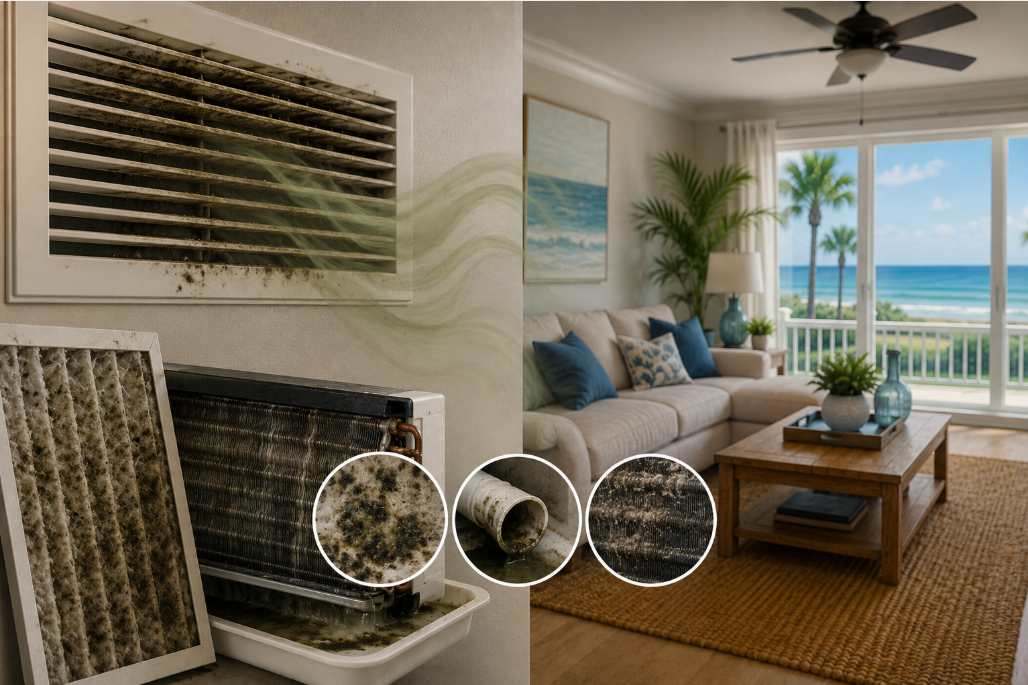
The air in your home might feel heavy, causing a persistent sticky sensation on your skin and potentially even fostering mold or mildew growth in extreme cases. You’ll find yourself constantly adjusting the thermostat, yet never quite achieving that dry, comfortable coolness that a properly sized system provides.
Increased Energy Spikes from Frequent On-Off Cycles
Each time your AC unit starts up, it draws a significant surge of power. An oversized system, constantly short-cycling, will initiate these energy spikes repeatedly throughout the day.
These frequent power surges translate directly into higher electricity bills. You might see your energy consumption climb, despite your home feeling less comfortable than it should be, due to the inefficient operation.
Imagine your electricity meter spinning faster with every start-up; an oversized AC vitally forces it to do this many more times than necessary. This constant stop-and-go operation prevents the system from settling into a more efficient, steady running state, where it consumes less energy over time.
What Happens If Your AC Is Too Small
An undersized AC system in your Texas City home will simply struggle to meet the demands of our intense heat. This constant battle against the elements leads to a cascade of problems, impacting your comfort, energy bills, and the longevity of your equipment. You will notice your home never truly feels cool. Your AC unit will be forced to work harder and longer, trying to achieve a temperature it simply isn’t equipped to maintain. This relentless operation causes several detrimental effects that you will want to avoid.
Continuous Operation and Inability to Reach Set Points
You might find your AC running non-stop, especially during the hottest parts of the day. This continuous operation means your system is constantly consuming energy without ever fully satisfying the thermostat’s demands. The air conditioner struggles to reach your desired temperature, leaving your home feeling warmer than you’d like. Your system simply can’t generate enough cooling capacity to overcome the heat gain in your Texas City home.
Excessive Strain on the Compressor and Internal Components
A continuously running AC places immense stress on its most critical component: the compressor. This part is designed for cycles of operation, not constant on-time. The motor and other internal parts experience accelerated wear and tear from this relentless demand. You are effectively shortening the lifespan of your entire AC unit, leading to premature breakdowns and costly repairs. Operating under such duress, the compressor consistently draws high electrical currents, generating excessive heat within its motor windings. This sustained thermal stress degrades the insulation around the wires and can eventually lead to a complete motor burnout. Furthermore, the constant vibration and friction within the compressor’s moving parts, without adequate rest or lubrication cycles, accelerate mechanical fatigue, causing seals to fail and bearings to wear out much faster than intended.
Uneven Cooling and Persistent Hot Spots Throughout the Home
You will likely notice certain rooms or areas of your home remain significantly warmer than others. The undersized AC cannot distribute cool air effectively to all zones. These persistent hot spots create an uncomfortable living environment, no matter how low you set the thermostat. Your family will constantly seek out the few cooler areas, highlighting the system’s inadequacy. The limited cooling capacity of an undersized unit means that by the time cool air reaches the furthest rooms or those with greater sun exposure, it has already absorbed substantial heat from the ductwork and surrounding environment. This diminished cooling power struggles to counteract the localized heat gain in these areas, resulting in noticeable temperature disparities. You might even observe that rooms on the west side of your home or upstairs levels consistently feel warmer, as the AC simply lacks the reserve capacity to overcome the concentrated heat load in those specific zones.
What Size AC Do You Really Need in Texas City Homes? Understanding Tonnage and BTU Ratings
Defining the Relationship Between BTUs and Cooling Tons
You often hear about AC units measured in “tons,” but what does that actually mean for your home’s cooling? This measurement directly relates to the British Thermal Unit (BTU), which quantifies the amount of heat an AC unit can remove from your home in an hour. One cooling ton equals 12,000 BTUs per hour, providing a standardized way to express an air conditioner’s cooling capacity. Knowing this conversion helps you understand the true power behind different AC units.
How Capacity Requirements Change Based on Local Climate Data
Your home’s location dramatically impacts the AC capacity you need, especially in Texas City’s unique coastal climate. High humidity levels here mean your AC must work harder to remove moisture from the air, not just lower the temperature. Consider the intense Texas City summers, which demand a system capable of consistent, powerful cooling. The constant battle against heat and humidity influences the necessary BTU rating for effective comfort and efficiency in your home. The specific climate data for Texas City, including average temperatures, humidity levels, and typical heat gain for homes, is crucial for accurate AC sizing. A professional load calculation takes these environmental factors into account to prevent both oversizing and undersizing, ensuring your system performs optimally through every season.
Matching System Capacity to Specific Texas City Building Codes
Your AC installation must also comply with Texas City’s local building codes, which often include specific requirements for HVAC systems. These codes ensure safety, energy efficiency, and proper installation practices within your home. Meeting these regulations means your AC system will not only operate effectively but also legally. A qualified HVAC contractor will be familiar with all relevant Texas City codes during the sizing and installation process. Adhering to Texas City building codes for HVAC systems typically involves specific guidelines for ductwork, ventilation, insulation, and the overall energy efficiency of the installed unit. These codes are designed to protect homeowners and ensure that new or replacement systems contribute to a safe and sustainable living environment.
Why DIY Sizing Often Leads to Problems
Attempting to size an AC system yourself can introduce significant errors, impacting your home’s comfort and your wallet. You might overlook critical details that only a professional assessment can identify. Such miscalculations lead to systems that either overwork or underperform, neither of which provides the optimal cooling experience you desire in Texas City.
The Inaccuracy of Generic “Rule of Thumb” Estimates
Relying on simple square footage calculations for your AC unit is a common but flawed approach. These generic estimates fail to account for the unique characteristics of your Texas City home. Every home possesses different insulation levels, window types, and sun exposure, rendering broad generalizations ineffective for precise sizing.
Overlooking Structural Variables and Air Leakage Issues
Your home’s specific construction, including ceiling height and insulation quality, profoundly influences its cooling needs. Ignoring these elements can result in an AC system ill-equipped to handle the Texas heat. Air leaks through windows, doors, or ducts also significantly impact how much cooling capacity your home requires. These subtle issues allow conditioned air to escape, forcing your system to work harder. These structural nuances and hidden air leaks mean that a larger or smaller unit than anticipated might be necessary to achieve consistent comfort and efficiency. A proper load calculation accounts for these factors, ensuring your system isn’t constantly fighting against unseen losses.
The Financial Risks of Purchasing Incorrect Equipment
Investing in an improperly sized AC system can lead to substantial financial losses, both initially and over its lifespan. You could spend more on a unit that doesn’t meet your needs. Operating an inefficient system means higher monthly energy bills and potentially costly repairs or premature replacement down the line. An incorrectly sized unit not only drains your bank account through increased energy consumption but also shortens the equipment’s lifespan. This means you might face another significant investment much sooner than anticipated, compounding your initial financial mistake.
What Is a Manual J Load Calculation?
Understanding the intricacies of your home’s thermal needs becomes paramount in achieving optimal comfort. This comprehensive assessment, known as a Manual J load calculation, precisely quantifies the heat your home gains. It considers every detail influencing temperature, ensuring your AC system is perfectly matched. This calculation moves beyond simple square footage estimates, providing a scientific basis for your cooling system. You receive a tailored recommendation that guarantees efficient operation and consistent comfort throughout the year.
The Industry Standard for Precise Thermal Analysis
The Manual J methodology represents the heating and cooling industry’s gold standard for determining residential cooling and heating loads. This detailed process ensures that your HVAC system is perfectly sized for your specific property in Texas City. You can trust this calculation to account for every variable, from your home’s unique construction to the Texas City climate. It prevents common sizing errors that lead to discomfort and wasted energy.
Software-Driven Assessments vs. Manual Estimations
Modern Manual J calculations are typically performed using specialized software, which streamlines the complex data entry and calculations. These advanced tools offer unparalleled accuracy compared to outdated manual estimations. Relying on software ensures every variable is meticulously considered, reducing the potential for human error. You receive a precise assessment that guarantees optimal system performance for your Texas City home. The software takes into account your specific insulation R-values, window U-factors, infiltration rates, internal heat gains from appliances and occupants, and even the orientation of your home to the sun. This level of detail is simply not achievable with manual estimations, which often lead to either oversized or undersized systems.
How Professionals Use Manual J to Guarantee System Performance
HVAC professionals utilize the Manual J calculation as their primary tool to design an air conditioning system that delivers consistent comfort and efficiency. They input specific details about your home, generating a precise load requirement. You benefit from an AC system that effectively combats the Texas City heat without overworking or short-cycling. This expert analysis ensures a perfectly balanced indoor environment. Professionals leverage the Manual J data to not only determine the correct tonnage but also to inform ductwork design and equipment selection. This integrated approach ensures that the entire HVAC system works in harmony, providing optimal airflow, humidity control, and energy efficiency, ultimately extending the lifespan of your investment.
Signs Your Current AC Is the Wrong Size
You might suspect your current AC system isn’t quite right for your home, but how can you be sure? Your comfort and wallet often provide the clearest indicators. An improperly sized unit will manifest specific issues that point directly to an imbalance between your home’s needs and the system’s capacity. These problems extend beyond simple discomfort, impacting your system’s longevity and your monthly expenditures. Recognizing these tell-tale signs allows you to address the root cause, rather than just treating symptoms, leading to a truly optimized cooling solution.
Frequent Repairs and Premature System Failure
Your AC system experiences excessive wear and tear when it’s the wrong size. An undersized unit constantly struggles to meet demand, running almost non-stop in the Texas heat. This continuous operation strains components, leading to breakdowns and early part replacements. Conversely, an oversized system rapidly cools your home, then quickly shuts off. This “short cycling” means the compressor frequently starts and stops, which is incredibly taxing on the machinery and significantly shortens its lifespan.
Unusually High Electric Bills During Moderate Months
You might notice your energy consumption remains high even when the weather isn’t at its most extreme. An undersized AC works overtime to keep up, using more electricity than it should. The system never truly rests, constantly drawing power. An oversized unit, while cooling quickly, then restarts frequently, and each start-up consumes a significant burst of energy. This stop-and-go operation prevents the system from operating efficiently, translating directly to higher monthly costs for you. Your electric bill can reveal a lot about your AC’s efficiency. If you find yourself paying more than you expect during milder periods, it’s a strong signal your system isn’t operating optimally, likely due to improper sizing.
Visible Mold or Mildew Growth Due to Humidity Imbalance
You may observe a musty odor or even visible mold growth in certain areas of your home. An oversized AC cools your home too quickly without adequately removing humidity from the air. This rapid cooling leaves excess moisture, creating an ideal environment for mold and mildew. A damp indoor environment not only feels uncomfortable but also poses health risks. Your AC’s primary role includes dehumidification, and if it fails in this aspect, you’ll feel the sticky humidity and see its unwelcome results. The lingering humidity in your home from an oversized AC creates a breeding ground for mold and mildew, particularly in a climate like Texas City. This isn’t just an aesthetic issue; it can affect air quality and potentially impact your family’s health.
Impact of Home Insulation and Ductwork on Sizing
Your home’s ability to retain cool air directly affects the required AC tonnage. Poor insulation allows heat to penetrate your living space, forcing your system to work harder and potentially needing a larger unit than an otherwise identical, well-insulated home.
Leaky ductwork also permits cooled air to escape into unconditioned areas like attics or crawl spaces. This loss means less cool air reaches your rooms, making your AC less effective and potentially leading to an oversized unit recommendation to compensate for the inefficiencies.
Assessing R-Values in Attic and Wall Insulation
Understanding your home’s R-values provides a clear picture of its thermal resistance. Higher R-values in your attic and walls signify better insulation, reducing heat gain and lessening the burden on your air conditioning system.
You should inspect your attic for adequate insulation depth and check your walls for any signs of missing or compacted materials. Improving these areas can dramatically lower your home’s heat load and influence the optimal AC size.
The Effect of Ductwork Integrity on Delivered Airflow
Compromised ductwork can lead to significant airflow issues, directly impacting how much cool air reaches each room. Leaks, kinks, or disconnected sections mean your AC is cooling your attic or crawl space, not your living areas.
Even small gaps in your ductwork can result in substantial energy loss and reduced system performance. This inefficiency means your AC runs longer to achieve desired temperatures, potentially leading to discomfort and higher utility bills.
Professional ductwork sealing and insulation can prevent conditioned air from escaping, ensuring maximum airflow reaches your living spaces. This optimization allows your AC system to operate more efficiently, often meaning you can achieve adequate cooling with a smaller, properly sized unit.
How Improving the Building Envelope Reduces Needed Tonnage
Strengthening your home’s building envelope, through upgrades like better windows or tighter sealing, significantly reduces heat transfer. This proactive approach minimizes the amount of heat entering your home, lessening the demand on your air conditioner.
By creating a more sealed and insulated environment, you can often reduce the required AC tonnage for your Texas City home. A smaller, correctly sized unit will cycle properly, dehumidify effectively, and provide consistent comfort without overworking.
Investing in improvements such as sealing air leaks around windows and doors, upgrading to energy-efficient windows, or adding radiant barriers in your attic directly contributes to a more efficient home. These enhancements collectively lower your cooling load, allowing a smaller, more cost-effective AC system to maintain comfortable indoor temperatures while consuming less energy.
Choosing the Right Technology: Variable vs. Single Stage
Selecting the ideal AC technology goes hand-in-hand with proper sizing for your Texas City home. You can choose between single-stage, two-stage, or variable-speed systems, each offering distinct advantages in terms of comfort, efficiency, and humidity control.
Your decision will impact how consistently your home maintains its desired temperature and how effectively it battles the pervasive humidity. Understanding the operational differences between these technologies is key to making an informed choice for lasting comfort.
How Variable Speed Compressors Compensate for Sizing Fluctuations
Variable speed compressors adjust their output to precisely match your home’s cooling demands. This allows the system to run at lower capacities for longer durations, preventing the short-cycling often associated with oversized single-stage units.
This adaptability means a variable speed system can effectively handle slight discrepancies in a Manual J calculation. It provides a more consistent indoor temperature and superior dehumidification, even if the initial sizing isn’t absolutely perfect.
Benefits of Two-Stage Cooling in Humid Coastal Climates
Two-stage cooling systems offer a significant advantage by operating at two distinct capacities: typically 70% and 100%. This allows them to run at the lower, more efficient setting for most of the time, especially during milder weather.
Operating at a lower stage means longer run times, which is important for removing more humidity from the air. This extended operation at a reduced capacity greatly enhances comfort in Texas City’s consistently humid environment, preventing that clammy feeling.
The ability to run at a lower stage for longer periods allows two-stage systems to continuously pull moisture from your indoor air. This consistent dehumidification is a game-changer for homes in coastal areas, making the air feel cooler and more comfortable even at higher thermostat settings.
Comparing Upfront Costs vs. Performance Benefits
| Upfront Costs vs. Performance Benefits | |
|---|---|
| Single-Stage Systems | Offer the lowest initial investment but provide less precise temperature control and humidity removal. |
| Two-Stage Systems | Have a moderate upfront cost, delivering improved comfort and better dehumidification than single-stage units. |
| Variable-Speed Systems | Represent the highest initial investment, yet they offer unparalleled comfort, efficiency, and humidity control. |
| Additional Considerations | |
|---|---|
| Energy Savings | Higher efficiency systems (two-stage and variable-speed) often result in lower monthly energy bills over their lifespan. |
| Long-Term Value | The enhanced comfort and reduced operational costs of advanced systems can provide significant long-term value, offsetting the higher initial price. |
AC Installation Services in Texas City, TX
Your new, properly sized Texas City AC system requires expert installation to perform as intended. A professional installation ensures every component works together efficiently, maximizing your comfort and minimizing future problems.
Incorrect installation can negate the benefits of even the best equipment, leading to reduced efficiency, higher energy bills, and premature system failure. Trusting certified professionals is paramount for optimal results.
Selecting a Licensed and Insured Local HVAC Contractor
Finding a reputable HVAC contractor is the next critical step after determining your AC size. You need a team with proven expertise in Texas City’s unique climate conditions.
Always verify that any prospective contractor holds the necessary licenses and comprehensive insurance. These credentials protect you from liability and guarantee adherence to industry standards.
The Importance of Professional Post-Installation Testing
After your new AC system is installed, thorough testing is vital to confirm everything operates correctly. Technicians meticulously check refrigerant levels, airflow, and electrical connections.
This detailed post-installation testing ensures your system delivers optimal cooling and dehumidification from day one. You want your AC to perform perfectly, especially with Texas City’s intense humidity.
Professional post-installation testing involves more than just turning on the unit. Technicians conduct a series of diagnostic checks, including measuring temperature differentials across the coil, verifying static pressure in the ductwork, and confirming the thermostat communicates correctly with the outdoor and indoor units. This comprehensive evaluation identifies potential issues before they become major problems, guaranteeing your new AC system is fine-tuned for maximum efficiency and comfort, preventing common post-installation headaches like uneven cooling or excessive energy consumption.
Custom Maintenance Plans for Coastal HVAC Systems
Protecting your investment in a new AC system requires ongoing care, especially in a coastal environment. Salt air and humidity can accelerate wear and tear on components.
Consider a customized maintenance plan designed specifically for the challenges of Texas City’s climate. Regular preventative service extends your system’s lifespan and maintains its efficiency.
A custom maintenance plan for coastal HVAC systems goes beyond standard tune-ups. It includes specialized cleaning to remove corrosive salt residue from coils and electrical components, checks for rust and corrosion on the outdoor unit, and ensures all seals and connections are secure against moisture intrusion. Technicians will also assess the impact of high humidity on your indoor air quality and dehumidification performance, recommending adjustments or additional solutions if needed. This tailored approach significantly reduces the likelihood of unexpected breakdowns and costly repairs, ensuring your AC remains a reliable source of comfort despite the harsh coastal elements.
Conclusion
Drawing together the information, you understand that selecting the correct AC size for your Texas City home is paramount for comfort and energy savings. Avoid the common pitfall of assuming a larger unit is always better; an oversized system will short-cycle and leave your home feeling clammy, while an undersized one will overwork itself with little relief. Your home’s unique characteristics, from its insulation to its window orientation, all play a role in determining the ideal system. You should always consult with a qualified HVAC professional at Alex’s Air to perform a Manual J load calculation. This precise assessment ensures the AC unit you install is perfectly matched to your home’s cooling demands, leading to optimal performance and efficiency. Investing in the right-sized system will provide consistent cooling, lower your utility bills, and extend the life of your equipment, giving you peace of mind throughout Texas City’s hot seasons.
FAQ
Q: How does Texas City’s unique climate impact AC sizing requirements?
A: Texas City experiences high humidity levels year-round, which significantly affects AC sizing. A correctly sized unit not only cools the air but also removes moisture. An oversized AC may cool the home too quickly, shutting off before it has a chance to dehumidify effectively. This leaves residents feeling sticky and uncomfortable, even if the thermostat reads a cool temperature. An undersized unit, by contrast, struggles to keep up with both the heat and the humidity, leading to constant running and higher energy bills without achieving true comfort. Proper sizing for Texas City homes prioritizes both cooling capacity and humidity removal.
Q: What are the main consequences of installing an improperly sized AC unit in a Texas City home?
A: Installing an improperly sized AC unit can lead to several problems. An oversized system often “short cycles,” meaning it turns on and off frequently. This wastes energy, puts extra wear and tear on components, and fails to adequately dehumidify the air, resulting in a clammy feeling. An undersized system runs almost continuously, struggling to reach the desired temperature, especially during peak heat. This also increases energy consumption, shortens the unit’s lifespan, and can still leave parts of your home uncomfortably warm. Neither scenario provides optimal comfort or energy efficiency.
Q: What factors do professional HVAC contractors consider when performing an AC load calculation for Texas City homes?
A: HVAC professionals use a comprehensive load calculation, often following Manual J guidelines, to determine the precise AC size needed. They consider the home’s total square footage, ceiling heights, and the type and quality of insulation in walls and attics. Window characteristics, such as their size, number, type (single or double pane), and exposure to direct sunlight, are also important. The number of occupants, heat-generating appliances, and even the home’s orientation on the lot play a role. These details collectively determine the heat gain your home experiences, guiding the selection of an appropriately sized AC system.
Q: My current AC system seems to run constantly or cycles on and off very quickly. Could this indicate an incorrect size?
A: Yes, both scenarios can be strong indicators of an improperly sized AC unit. If your AC runs almost non-stop, even on moderately warm days, it might be undersized and unable to meet your home’s cooling demands. Conversely, if the unit turns on, cools the air quickly, and then shuts off after a short period, only to turn on again soon after, it could be oversized. This “short cycling” prevents proper dehumidification and puts unnecessary strain on the system’s components. A professional evaluation can confirm if sizing is the issue and recommend solutions.
Q: Can upgrading my home’s insulation or windows affect the AC size I need?
A: Absolutely. Improving your home’s thermal envelope through upgrades like new, energy-efficient windows or additional attic insulation can significantly reduce your home’s heat gain. This means your home will require less cooling capacity to maintain comfortable temperatures. If you plan major insulation or window upgrades, it’s advisable to have a new load calculation performed before replacing your AC system. You might find that you can install a smaller, more efficient AC unit, which could save you money on both the equipment purchase and long-term energy bills.