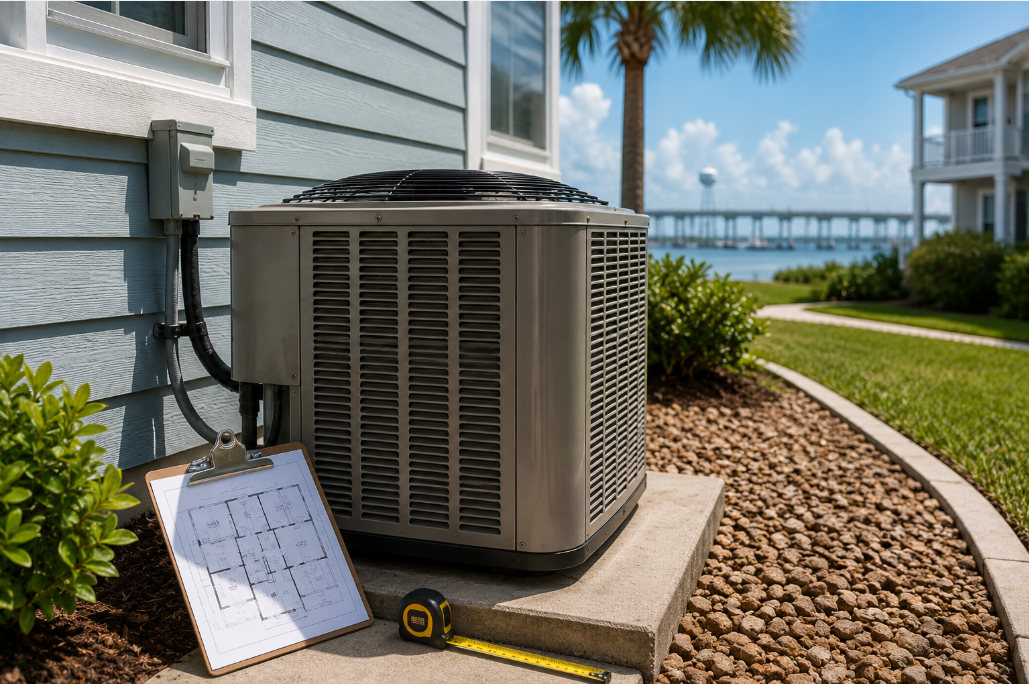
Most homeowners face the AC repair vs. replacement dilemma. You are weighing the costs and benefits of fixing your existing unit against investing in a new one. This decision is particularly challenging in Galveston County, where the unique coastal environment impacts HVAC systems. You need to consider your unit’s age, the frequency of repairs, and its energy efficiency.
Understanding the Coastal Climate Impact on HVAC Systems in Galveston County
Living near the coast presents unique challenges for your home’s air conditioning system. You face a constant battle against elements that inland residents rarely encounter, which directly affects your unit’s performance and longevity.
You must consider these environmental factors when evaluating whether to repair or replace your AC. The specific conditions in Galveston County accelerate wear and tear, making your decision more nuanced than a simple age-based calculation.
High Humidity and Its Effect on Component Longevity
The persistent high humidity levels in Galveston County place an extraordinary strain on your AC unit. Your system works harder to extract moisture from the air, beyond just cooling it.
This increased workload can lead to premature wear on internal components, from coils to compressors. You might notice your system struggling to maintain comfortable humidity levels indoors, even when the temperature seems fine.
Salt Air Corrosion: The Silent Killer of Outdoor Units
The microscopic salt particles carried on the coastal breeze are incredibly corrosive. These particles continuously attack the metal components of your outdoor AC unit.
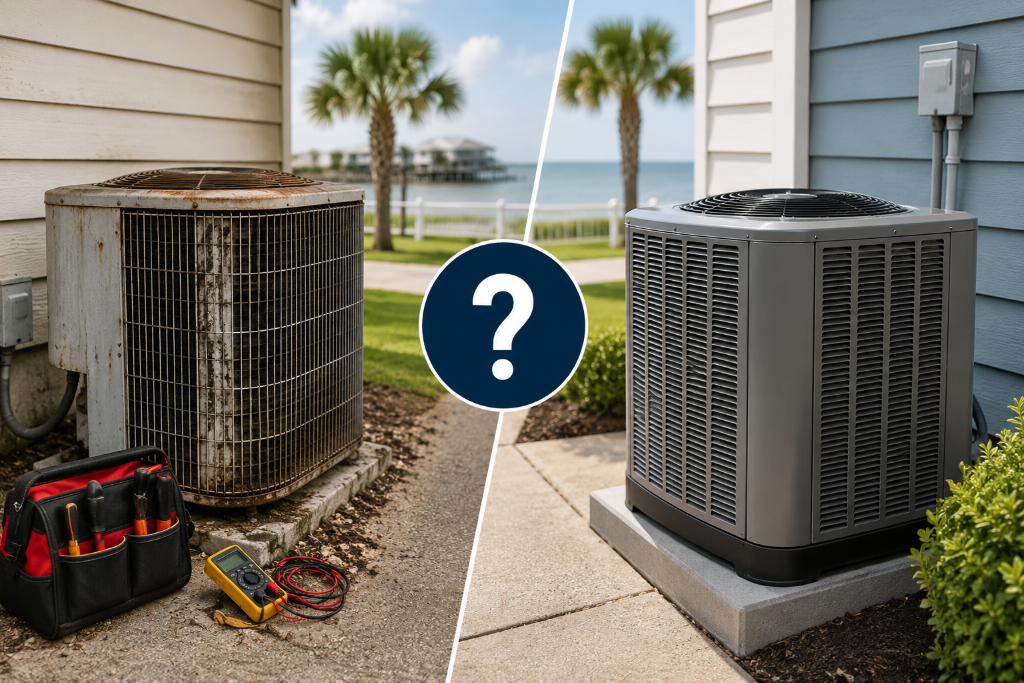
You will often see rust and deterioration on the condenser coils, fins, and electrical connections. This slow, relentless corrosion compromises the structural integrity and operational efficiency of your system over time.
Salt air corrosion can silently degrade your outdoor unit, leading to pinhole leaks in refrigerant lines, weakened electrical connections, and a significantly reduced heat exchange capability. You might not see the damage immediately, but it steadily compromises your system’s performance and eventual lifespan.
Typical Lifespan of Air Conditioners in Coastal Texas vs. Inland Regions
You can expect a shorter lifespan for your air conditioner in coastal Texas compared to units in inland regions. The combined assault of high humidity and salt air significantly reduces the average operational years.
You might find that a system expected to last 15-20 years elsewhere only provides 8-12 years of reliable service here. This accelerated aging heavily influences the repair versus replacement decision.
Air conditioners in inland areas often enjoy a longer life due to less aggressive environmental conditions. For instance, a unit in a drier, less corrosive climate could easily exceed the 15-year mark with proper maintenance. However, your Galveston County AC faces a constant battle, making regular assessments and proactive decisions about repair or replacement even more critical for you.
When AC Repair Makes Sense
You can often extend the life of your AC unit and save money by opting for a repair. This is particularly true when your system is still relatively new or the underlying problem is not indicative of widespread system failure. Consider the following scenarios where repair is likely the most sensible choice for your Galveston County home.
Your professional HVAC technician can accurately diagnose the issue and provide a transparent cost estimate for the repair. Weighing this against the potential benefits of a few more years of reliable cooling will guide your decision toward the most economical path.
Minor Mechanical Failures and Electrical Component Swaps
Many common AC issues stem from isolated component failures rather than systemic breakdowns. A faulty thermostat, a worn capacitor, or a malfunctioning fan motor can often be replaced individually without needing to overhaul the entire system.
Replacing these smaller parts is typically a straightforward and cost-effective solution. This approach allows you to restore your AC’s functionality without the significant expense associated with a full unit replacement.
Systems Still Covered Under Manufacturer Parts Warranties
Your AC unit may still be protected by its manufacturer’s parts warranty. This coverage significantly reduces the financial burden of repairs, as you would only be responsible for labor costs.
Checking your warranty status before making any decisions can lead to substantial savings. Many warranties offer years of protection, making repairs an attractive option when covered components fail.
Manufacturer parts warranties typically cover the cost of replacement parts for a specified period, usually 5-10 years from the installation date. This protection is a major advantage, as it shields you from the high cost of new components if a defect arises. Always verify your warranty details with your HVAC professional to understand what parts are covered and for how long.
Units with a Consistent Record of Regular Professional Maintenance
An AC system that has received diligent annual maintenance often experiences fewer major breakdowns. Regular tune-ups identify and address minor issues before they escalate into costly repairs.
Your well-maintained unit likely has a longer lifespan ahead, making targeted repairs a wise investment. This proactive approach helps preserve the overall health and efficiency of your system.
Consistent professional maintenance involves routine inspections, cleaning, and adjustments that keep your AC running smoothly. Technicians can spot potential problems like refrigerant leaks, clogged drains, or failing electrical connections early, allowing for preventive repairs that extend your unit’s operational life. A well-cared-for system is less prone to unexpected failures, making repairs a more reliable solution than replacement for isolated issues.
Key Factors to Consider in Galveston County
Making the repair-or-replace decision for your AC system in Galveston County involves a few unique considerations. You need to weigh the immediate cost against long-term benefits and potential savings. Local climate conditions heavily influence your system’s longevity and performance.
Several elements come into play when evaluating your options. Consider these specific points as you assess your AC unit:
- Your system’s current age and repair history
- The extent of damage from salt spray and humidity
- The potential for energy savings with a newer, more efficient model
- The importance of maintaining optimal indoor air quality and preventing mold
Knowing these factors will guide you toward the most economical and comfortable solution for your home.
Proximity to the Gulf and Exposure to Salt Spray Damage
The salty air in Galveston County poses a significant threat to outdoor AC units. Corrosion from salt spray can rapidly degrade coils, electrical components, and the overall structural integrity of your system. Regular exposure to this corrosive environment often leads to premature breakdowns and a shortened lifespan for even well-maintained units.
Examine your existing unit for signs of rust or pitting, especially on the condenser coil. If your system is showing advanced signs of salt-related damage, repairs might only offer a temporary fix. A new, specially coated unit designed for coastal environments could provide much better long-term protection and reliability.
Local Utility Rates and Potential Monthly Energy Savings
Electricity costs in Galveston County can impact your monthly budget, especially during peak cooling seasons. An aging or inefficient AC unit can consume significantly more power to achieve the same level of comfort as a newer, more energy-efficient model. You might be spending far more on electricity than you realize.
Newer AC systems boast impressive Seasonal Energy Efficiency Ratio (SEER) ratings, meaning they convert electricity into cooling more effectively. Replacing an older unit with a high-SEER model can lead to substantial reductions in your monthly energy bills. These savings can, over time, offset a significant portion of the replacement cost, making an upgrade a smart financial move.
Calculating your potential savings involves comparing your current unit’s SEER rating with that of a new system. Many utility providers offer tools or rebates for energy-efficient upgrades. Factor in these potential incentives when evaluating the long-term cost-effectiveness of a replacement.
Indoor Air Quality and Mold Prevention Requirements in Humid Climates
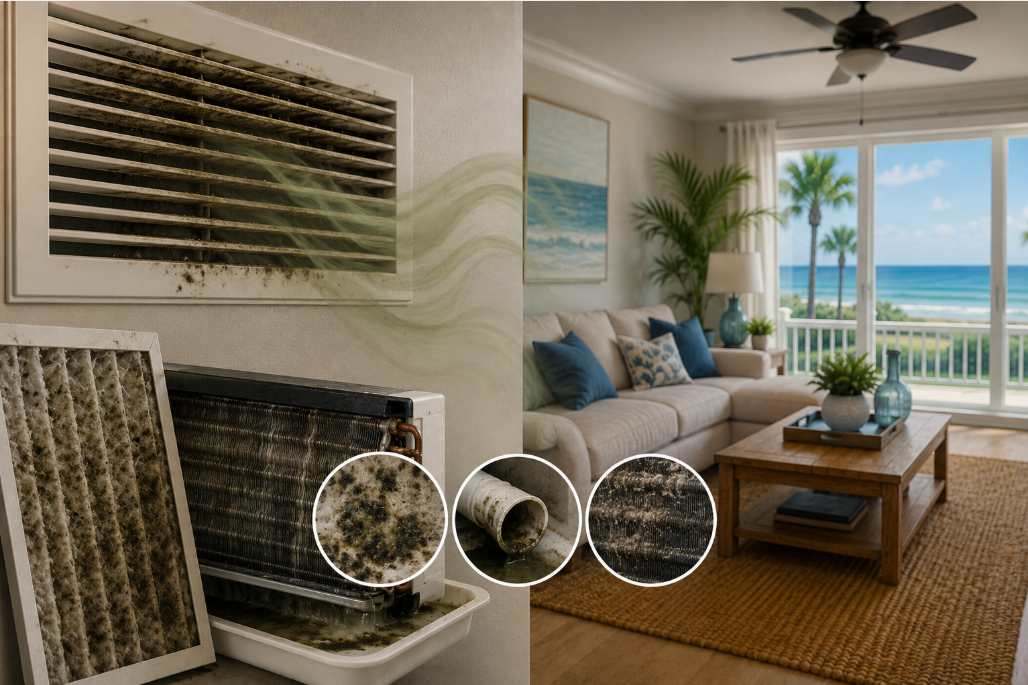
High humidity levels in Galveston County create an ideal breeding ground for mold and mildew within your home. An inefficient AC system may struggle to adequately dehumidify the air, leading to discomfort and potential health issues. Poor indoor air quality can exacerbate allergies and respiratory problems.
Modern AC systems offer superior humidity control capabilities, actively removing moisture from the air. This improved dehumidification not only enhances comfort but also plays a critical role in preventing mold growth throughout your home. Ensuring proper indoor air quality is a significant health and comfort consideration.
Consider whether your current system adequately addresses humidity. If you frequently notice a damp smell, condensation, or visible mold, your AC might not be up to the task. A new system with advanced humidity control features can drastically improve your indoor environment, making your home healthier and more pleasant.
The Impact of SEER2 Ratings and Modern Efficiency Standards
Considering a new AC system means understanding the latest efficiency standards. You will find that new SEER2 ratings directly influence how much energy your unit consumes, which translates into your monthly utility bills. These updated metrics provide a more accurate reflection of real-world energy consumption, guiding you toward systems that offer superior performance and long-term savings in Galveston County’s demanding climate.
Understanding the 2023 DOE Efficiency Mandates for the South
New regulations took effect in 2023, setting higher minimum efficiency standards for AC units. You must now meet specific SEER2 ratings if you are installing a new system in the Southern region, including Galveston County. These mandates ensure that every new installation contributes to greater energy conservation, reducing the overall carbon footprint and your personal energy consumption.
How Higher SEER2 Ratings Drastically Lower Monthly Cooling Costs
Choosing an AC unit with a higher SEER2 rating offers direct financial benefits. You will experience a noticeable reduction in your monthly electricity bills as the system operates more efficiently. This improved efficiency means your AC unit uses less power to achieve the same cooling effect, making a significant difference over the hot Galveston summers. Higher SEER2 ratings are not just numbers; they represent tangible savings. For example, upgrading from an older 10 SEER unit to a new 15 SEER2 system could cut your cooling costs by a substantial percentage, putting more money back in your pocket each month. This long-term investment quickly pays for itself through reduced energy expenses.
Comparing Modern Inverter Technology to Decade-Old Single-Stage Units
Older single-stage AC units operate at a constant, full capacity, cycling on and off to maintain temperature. You experience less consistent cooling and higher energy spikes with this older technology.
Newer inverter technology, conversely, allows your compressor to adjust its speed precisely. This creates a more stable temperature, uses less energy, and provides superior dehumidification.
Inverter technology represents a significant leap forward in AC performance. Instead of the jarring on-off cycles of older units, inverter-driven systems continuously adjust, much like a car’s cruise control. This precise modulation not only saves energy but also dramatically improves indoor comfort by eliminating temperature swings and effectively managing humidity, which is particularly beneficial in Galveston’s humid environment.
| Single-Stage Units | Inverter Technology |
| Operates at 100% capacity or off | Adjusts compressor speed continuously |
| Less consistent temperature control | Maintains precise temperature |
| Higher energy consumption due to frequent starts | Lower energy use through variable operation |
| Limited dehumidification capabilities | Superior humidity control |
Cost Comparison: Repair vs Replacement
Deciding between repairing your AC unit or replacing it involves a careful look at the financial implications. You want to ensure your investment provides the best comfort and value for your Galveston County home. The table below outlines key cost considerations to guide your decision-making process.
| Cost Factor | Description |
|---|---|
| Immediate Upfront Investment | The initial cash outlay for either a repair or a new system. |
| Long-Term Operational Savings | How much you can save on energy bills and future repairs. |
| Return on Investment (ROI) | The financial benefit gained from choosing a new, efficient system. |
| Hidden Costs | Unexpected expenses associated with older, less efficient units. |
Immediate Upfront Investment vs. Long-Term Operational Savings
Considering the immediate cost of a repair versus the upfront expense of a new system is your first step. A minor repair might seem like the cheaper option today, but it’s imperative to look beyond that initial price tag. You must weigh this against the potential for significant long-term operational savings that a new, more efficient unit can provide. Newer systems dramatically reduce monthly energy consumption, especially in Galveston’s demanding climate.
Calculating the Realistic Return on Investment (ROI) for New Equipment
Determining the realistic return on investment for new equipment requires a clear understanding of its benefits. A new, energy-efficient AC system can lead to substantial savings on your monthly utility bills. You should factor in the improved comfort and reliability you’ll gain, which translates into fewer service calls and a more consistent indoor environment. The “50% rule” often serves as a practical benchmark: if a repair costs half the price of a new unit, a replacement might offer a better ROI. You can calculate this ROI by comparing the energy savings from a new system against its purchase and installation cost. Consider the lifespan of the new unit and how quickly those monthly savings will effectively “pay back” your initial investment. Many homeowners find that the enhanced performance and reduced stress of a reliable system also contribute to their overall satisfaction.
Hidden Costs of Maintaining and Recharging Obsolete Systems
Older AC systems often come with a range of hidden costs that can quickly add up. Frequent breakdowns mean repeated service calls, and each visit incurs diagnostic and labor fees. You might also face the expense of recharging refrigerants for older units, which can be costly and less environmentally friendly. These recurring expenses chip away at your budget without providing a lasting solution. These hidden costs extend beyond just repair bills. An inefficient older system constantly works harder to cool your home, leading to higher electricity bills every month. Furthermore, finding replacement parts for obsolete models can become increasingly difficult and expensive, sometimes requiring custom orders or extended wait times, leaving you uncomfortable during peak heat.
The “50% Rule” Explained
You will often hear HVAC professionals reference the “50% rule” when discussing AC repair versus replacement. This practical guideline helps homeowners gauge whether investing in a repair is truly cost-effective or if their money would be better spent on a new system. This rule suggests that if a repair estimate approaches half the cost of a complete new AC unit, you should seriously consider replacement. You prevent throwing good money after bad, especially with an aging system.
Defining the Repair Cost vs. Replacement Value Threshold
You need to understand how to accurately apply the 50% rule to your specific situation. This means obtaining a clear, itemized repair quote and researching the current market price for a comparable new AC system. Your goal is to compare these two figures directly. If the repair cost crosses that 50% threshold, it signals that the unit’s remaining lifespan and potential future issues might not justify the current expenditure.
Applying the Rule to Galveston’s Unique Economic and Environmental Landscape
You must consider Galveston County’s specific environmental factors when applying this rule. Salt air, high humidity, and consistent heavy usage due to the climate significantly reduce the typical lifespan of HVAC systems. These conditions accelerate wear and tear, making the 50% rule even more pertinent here. You could face repeat repairs sooner than systems in less demanding environments. The unique conditions in Galveston mean that an AC unit might be considered “old” sooner than in other regions. A system that is only 8-10 years old could already be showing significant signs of wear due to the harsh coastal environment, making the replacement option more appealing when repair costs climb.
When to Break the Rule: Critical Exceptions for Rapidly Aging Systems
You might find situations where strictly adhering to the 50% rule isn’t the best course of action. For instance, if your system is nearing the end of its projected lifespan, even a repair below the 50% threshold may not be wise. Consider a unit that is already 12-15 years old in Galveston; any significant repair could be a temporary fix before another major component fails. You should weigh the immediate repair against the inevitable need for a full replacement in the near future. Even if a repair costs less than 50% of a new system, an AC unit in Galveston County that is already showing multiple signs of decline – such as frequent breakdowns, inconsistent cooling, or rising energy bills – might be a prime candidate for early replacement. Investing in a new, energy-efficient system can offer more immediate and long-term savings and comfort.
The Role of Refrigerant: R-22 vs. R-410A and Future Transitions
Understanding the type of refrigerant your AC system uses is incredibly important when considering repairs or replacement. Older systems often rely on R-22, commonly known as Freon, which has significant environmental implications. Your system’s refrigerant type directly impacts repair costs and its long-term viability in Galveston County. Modern air conditioners, by contrast, utilize R-410A, a more environmentally friendly alternative. Knowing this distinction helps you weigh the immediate repair cost against the future expenses and environmental responsibility associated with your cooling system.
The Phase-out of Freon and the Rising Costs of Older Refrigerant
The production of R-22 (Freon) completely ceased in 2020 due to its ozone-depleting properties. This ban means that supplies of this older refrigerant are now extremely limited. Finding R-22 for repairs on your existing system has become increasingly difficult and expensive. You will likely face significantly higher costs if your AC unit requires a Freon recharge or repair involving this refrigerant.
Transitioning to Modern, Eco-Friendly Cooling Agents
Newer AC units utilize refrigerants like R-410A, which are designed to be much more environmentally conscious. These modern cooling agents do not deplete the ozone layer, making them a sustainable choice for your home. Upgrading to a system that uses R-410A aligns with current environmental standards and ensures easier access to refrigerant for future maintenance. You will find that these newer refrigerants are readily available and more cost-effective for repairs. A transition to an R-410A system also often means improved energy efficiency for your home. These newer units are engineered to work optimally with modern refrigerants, potentially lowering your utility bills and enhancing overall comfort.
Impact of Refrigerant Leaks on the Long-Term Viability of Repairs
A refrigerant leak in an older R-22 system presents a costly dilemma. Locating and repairing the leak can be expensive, and then recharging with the increasingly rare R-22 adds another significant expense. Repeated leaks suggest a deeper issue within your AC unit, making continued repairs less practical. You could be pouring money into a system that will likely develop another leak soon, especially with the high cost of R-22. Considering the escalating price and scarcity of R-22, a persistent refrigerant leak in an older unit often points towards replacement as the more financially sound long-term decision. Investing in a new, R-410A system avoids these ongoing, expensive problems.
Benefits of Replacing Your AC System
Considering a new AC system offers numerous advantages beyond simply cooling your home. You will experience significant improvements in your indoor environment, making your home more comfortable and enjoyable, especially during Galveston County’s humid summers.
Upgrading to a modern unit can also lead to substantial long-term savings. You’ll notice a reduction in your monthly energy bills and gain peace of mind with a reliable system designed for efficiency and durability.
Enhanced Comfort Through Variable Speed and Humidity Control Technology
Your new AC system can provide unparalleled comfort with advanced variable speed technology. This allows the unit to precisely adjust its output, eliminating uncomfortable temperature swings and maintaining a consistent indoor climate.
Humidity control features work tirelessly to reduce moisture in your home. You will feel cooler at higher temperatures, reducing the strain on your system and creating a much more pleasant living space in Galveston’s coastal environment.
Peace of Mind Provided by Comprehensive New Parts and Labor Warranties
A new AC installation comes with extensive warranties that protect your investment. You receive coverage for both parts and labor, ensuring that any unexpected issues during the initial years are handled without additional costs.
These warranties offer significant financial security. You can relax knowing that your new system is backed by the manufacturer, giving you confidence in its performance and longevity.
You can expect a typical new AC system warranty to cover major components for up to 10 years and labor for a period of 1 to 5 years, depending on the manufacturer and installer. This comprehensive protection means you won’t be caught off guard by unexpected repair expenses shortly after your purchase, providing true peace of mind for years to come.
Increased Resale Value for Galveston County Real Estate Properties
Installing a new, energy-efficient AC system can significantly boost your property’s market appeal. Buyers often prioritize homes with updated mechanicals, knowing they won’t face immediate large expenses.
Your investment in a modern AC unit makes your home more attractive to potential buyers. You are offering them a key benefit: lower utility costs and a comfortable living environment from day one.
Prospective homebuyers in Galveston County are particularly keen on homes with reliable and efficient cooling systems due to the intense heat and humidity. A new AC unit signals that the home is well-maintained and ready for move-in, often translating into a higher selling price and a quicker sale. This upgrade is a tangible asset that differentiates your property in a competitive real estate market.
Financial Incentives: Tax Credits and Rebates for Galveston Residents
Replacing an aging AC unit can represent a significant investment for your Galveston home. Fortunately, various financial incentives can help offset these costs, making a new, energy-efficient system more attainable than you might think.
You can discover opportunities to save money through federal tax credits, local utility rebates, and even special manufacturer promotions. Exploring these options ensures you maximize your savings while upgrading to a more reliable and efficient cooling solution.
Federal Energy Efficiency Tax Credits under the Inflation Reduction Act
The Inflation Reduction Act offers substantial tax credits for homeowners who invest in energy-efficient home improvements, including new HVAC systems. You could be eligible for a credit covering a percentage of the installation costs for qualifying high-efficiency AC units and heat pumps.
This federal incentive directly reduces your tax liability, providing a tangible financial benefit for choosing an environmentally friendly and cost-saving cooling system. Consult with your HVAC professional to identify systems that meet the stringent efficiency requirements.
Local Utility Rebates and Seasonal Manufacturer Promotions
Many local utility providers in the Galveston area offer rebates for homeowners who upgrade to energy-efficient HVAC equipment. These programs encourage lower energy consumption and can provide immediate savings on your replacement project.
You should also keep an eye out for seasonal promotions directly from HVAC manufacturers. These limited-time offers can include discounts, special financing rates, or even extended warranties on new AC units, adding another layer of savings.
Checking with your local utility company, like CenterPoint Energy, is a smart first step to learn about available rebates for high-efficiency air conditioners and heat pumps. Many manufacturers release new promotions throughout the year, especially during peak cooling seasons or at the launch of new product lines, so staying informed can lead to significant savings on your new system.
Flexible Financing Options to Manage Large-Scale HVAC Projects
Even with tax credits and rebates, the upfront cost of a new AC system can be substantial. Many HVAC companies offer flexible financing solutions designed to make these projects manageable for your budget.
You can explore options like low-interest loans or deferred payment plans, allowing you to spread the cost over time. These financing choices ensure you don’t have to compromise on comfort or efficiency due to immediate financial constraints.
Reputable HVAC service providers often partner with financial institutions to offer various financing packages tailored to different credit profiles and project sizes. Discussing these options with your chosen HVAC contractor can help you find a payment plan that fits your monthly budget, making the transition to a new, efficient AC system smooth and stress-free.
How to Make the Right Decision for Your Home
Making an informed choice between AC repair and replacement requires a comprehensive evaluation of several factors beyond just the immediate problem. You will want to consider your home’s specific needs and the long-term implications of each option. This decision should align with your comfort expectations and financial planning. Consider the expert recommendations provided by a certified HVAC technician. They can offer a clear picture of your system’s overall health and explain the potential benefits of a new installation versus continued repairs. Your comfort and budget will guide this important decision.
Conducting a Professional Load Calculation (Manual J) for Proper Sizing
An accurate load calculation is necessary for any new AC installation. This detailed assessment determines the precise heating and cooling needs of your home. It prevents oversizing or undersizing, which can lead to inefficiencies and discomfort. Ignoring this step can result in an AC system that struggles to maintain consistent temperatures or runs excessively, wasting energy. Ensure your chosen HVAC professional performs this critical analysis to guarantee optimal performance.
Assessing Existing Ductwork Integrity and Attic Insulation Levels
Your home’s existing ductwork plays a significant role in overall HVAC efficiency. Leaky or poorly insulated ducts can waste a considerable amount of conditioned air, forcing your system to work harder. An inspection will reveal any necessary repairs or upgrades. Similarly, adequate attic insulation is crucial for maintaining stable indoor temperatures. Poor insulation allows heat to penetrate during summer and escape in winter, making your AC system less effective and increasing energy consumption. A professional assessment will identify air leaks, damaged sections, or insufficient insulation. Addressing these issues before or during a new AC installation ensures your new system operates at peak efficiency. This also maximizes your comfort and minimizes energy waste.
Balancing Immediate Budgetary Constraints with Decadal Energy Goals
The upfront cost of a new AC system can seem daunting, but it’s important to look beyond the initial expense. Consider the potential for significant energy savings over the next decade with a more efficient unit. This long-term perspective can reveal the true cost-effectiveness of replacement. Evaluate your financial capacity for a larger investment now versus recurring repair costs and higher utility bills in the future. Many homeowners find that a new, energy-efficient system pays for itself through reduced operating expenses. Thinking about the long-term also means factoring in potential property value increases and improved indoor air quality. A modern, efficient HVAC system is a desirable feature for any home.
Choosing the Right HVAC Professional in the Texas Gulf Coast
Selecting a qualified HVAC professional is as important as the repair or replacement decision itself. You need a technician who understands the unique challenges of the Galveston County climate, from corrosive salt air to persistent humidity. A knowledgeable expert will guide you toward solutions that last, saving you discomfort and expense in the long run. Finding the right company means looking beyond just the initial quote. You want a team that offers reliable service, transparent pricing, and a commitment to customer satisfaction. Your peace of mind comes from knowing your home’s comfort system is in capable hands.
Importance of NATE Certification and Local Texas Licensing
Always verify that any HVAC professional you consider holds a valid Texas HVAC license. This ensures they meet state-mandated standards for technical knowledge and ethical business practices. Unlicensed work can lead to unsafe installations and voided warranties. Seek out technicians with NATE (North American Technician Excellence) certification. This designation signifies a higher level of expertise, as NATE-certified professionals have passed rigorous tests covering specific HVAC specialties. Their advanced training means more accurate diagnostics and effective repairs.
Evaluating Local Reputation and Community-Specific Experience
Researching a company’s local reputation offers valuable insights into their service quality. Check online reviews and ask neighbors for recommendations on HVAC providers in Galveston County. Local experience with coastal conditions is invaluable. A company familiar with the Galveston area will understand the specific stresses your HVAC system faces. They know which units perform best in our humid, salty environment and can recommend preventative measures tailored to your home. This local experience means they’re more likely to stock parts common to systems in the region and can offer quicker service when you need it most. They understand how factors like sea breeze and high humidity impact system performance and longevity, allowing them to provide solutions that truly stand up to the local climate.
Essential Questions to Ask During a Professional In-Home Consultation
Prepare a list of questions before your consultation to ensure you cover all your concerns. Ask about their diagnostic process and how they determine if repair or replacement is the best option for your specific system. Understanding their methodology builds trust. Inquire about warranties on both parts and labor for any proposed repairs or new installations. You should also ask for a detailed, written estimate that clearly outlines all costs involved, avoiding any hidden fees later. During the consultation, ask about energy efficiency ratings for new systems if replacement is discussed, and how those ratings translate to potential savings on your utility bills. Also, clarify their emergency service availability, especially important during our hot Texas summers.
AC Repair & Replacement Services in Galveston County
Understanding the specific challenges of Galveston County’s climate, you need specialized HVAC services. You deserve solutions tailored to combat the unique environmental factors that impact your system’s longevity and efficiency. You can expect comprehensive repair and replacement options, ensuring your comfort no matter the season. These services focus on extending your system’s life or providing a high-efficiency upgrade when it’s time for a change.
Emergency Repair Response Times During Peak Heat Waves
When the heat is relentless, a broken AC is more than an inconvenience; it’s a health concern. You need a service provider who understands the urgency of immediate attention during Galveston’s peak heat waves. Our teams are strategically positioned to offer rapid response times, minimizing your discomfort. You will appreciate prompt service that restores your cooling quickly and efficiently.
Customized Maintenance Plans Designed for Coastal Properties
Coastal properties face distinct challenges from salt air and humidity, which accelerate wear and tear on HVAC systems. You can protect your investment with maintenance plans specifically crafted to address these unique environmental stressors. These plans include specialized inspections and cleanings that target corrosion and moisture-related issues. You will enjoy peace of mind knowing your system is receiving the care it needs to perform optimally in our demanding climate. Regular preventative maintenance helps identify potential problems before they escalate into costly repairs, extending your system’s lifespan and maintaining its efficiency.
Professional Installation Standards for High-Efficiency Coastal Units
Installing a high-efficiency unit in a coastal environment requires more than just standard procedures. You need professional installation that adheres to stringent standards, ensuring your new system can withstand the elements. Our certified technicians follow best practices for coastal installations, including proper sealing and corrosion-resistant components. You will benefit from an installation that maximizes your unit’s performance and longevity. Proper installation is crucial for maximizing energy efficiency and ensuring your system operates effectively for years, preventing premature breakdowns caused by improper setup.
Final Words
Presently, you face a significant decision regarding your AC unit in Galveston County. You should carefully weigh the age of your system, its repair history, and the potential for increased energy efficiency with a new unit. Consulting with a qualified HVAC professional will provide you with a detailed assessment, helping you understand the full scope of your options. Your comfort and long-term financial well-being depend on making an informed choice. Consider the “50% rule” as a valuable guide. A new, energy-efficient system can provide substantial savings on your utility bills and enhanced comfort for years to come. At Alex’s Air, we’re here to help. Contact us today with any questions you may have regarding your AC system.
FAQ
Q: What factors specific to Galveston County influence the decision to repair or replace an AC unit?
A: Galveston County’s unique coastal environment significantly impacts AC systems. Salt air causes corrosion, humidity leads to mold growth and increased workload, and high temperatures demand constant operation. These conditions can accelerate wear and tear, reducing a unit’s lifespan and increasing the frequency of breakdowns. When evaluating repair or replacement, consider how these environmental stressors have affected your current system’s performance and remaining life.
Q: How old is too old for an AC unit in Galveston County, making replacement a stronger option than repair?
A: Most AC units typically last 10-15 years. In Galveston County, the harsh coastal conditions can shorten this lifespan. If your unit is approaching or exceeding 10 years old, replacement often becomes a more sensible choice. Older units, even with repairs, are less energy-efficient and more prone to new issues. A new system offers modern efficiency and reliability, which becomes more appealing as your current unit ages.
Q: What are the telltale signs that my AC unit in Galveston County is failing and likely needs replacement, not just a repair?
A: Several indicators suggest your AC unit is nearing its end. You might notice your energy bills steadily increasing without a change in usage patterns. The unit may struggle to cool your home evenly, leaving hot and cold spots. Frequent repairs, especially for different components, signal systemic issues. Loud or unusual noises, like grinding or banging, and visible leaks around the outdoor unit are also serious warnings. If you experience these problems, a professional assessment can confirm if replacement is the better path.
Q: Can a new AC system significantly reduce my energy bills in Galveston County, and what efficiency ratings should I look for?
A: A new AC system can indeed lower your energy bills, particularly if your current unit is old and inefficient. Modern AC units feature higher Seasonal Energy Efficiency Ratio (SEER) ratings. In Galveston County, where AC runs frequently, opting for a system with a SEER rating of 16 or higher is generally recommended. Higher SEER ratings mean the unit uses less energy to produce the same amount of cooling, translating into noticeable savings over time. Look for ENERGY STAR certified models for optimal efficiency.
Q: What should I do if I am unsure whether to repair or replace my AC unit in Galveston County?
A: When in doubt, schedule a professional HVAC inspection. A certified technician can thoroughly assess your current system’s condition, diagnose any issues, and provide an accurate estimate for both repair and replacement options. They can also explain the long-term costs and benefits of each choice, considering your specific situation and the Galveston County climate. This expert advice helps you make an informed decision that best suits your comfort needs and budget.