You might notice a distinct increase in the musty smell, becoming more persistent and harder to ignore. Your AC system’s airflow could also feel noticeably weaker, signaling a growing obstruction within the ducts or coils. Reduced cooling efficiency often accompanies these worsening odors, meaning your home struggles to reach and maintain comfortable temperatures. Ignoring these signs allows microbial growth to spread, making the problem harder and more expensive to fix.
Signs the Problem Is Getting Worse
Escalating Health and Allergy Symptoms
You might experience a significant increase in allergy-like symptoms, such as sneezing, coughing, or itchy eyes, especially when the AC is running. These reactions indicate a higher concentration of mold spores circulating in your indoor air. Headaches or respiratory irritation could also become more frequent, particularly for those with existing sensitivities or asthma. Prolonged exposure to poor indoor air quality can exacerbate these health issues, impacting your daily comfort and well-being.
Visible Mildew Growth on Supply Vents
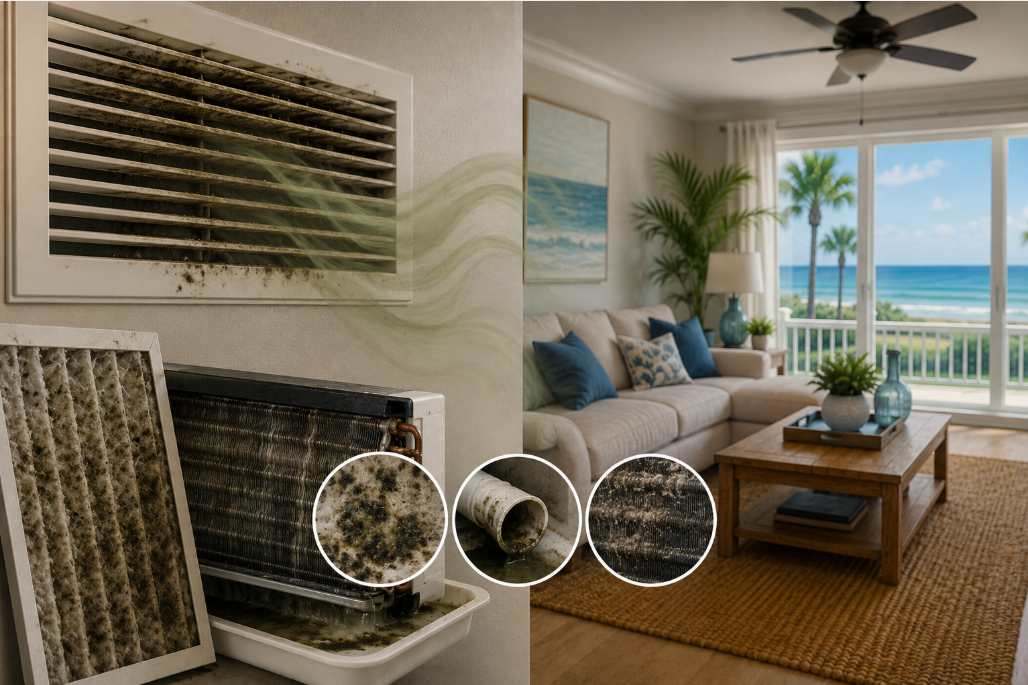
You may begin to see dark, fuzzy spots or discoloration appearing directly on your AC supply vents. This visible growth confirms that mold or mildew has established itself within your ductwork and is now spreading into your living space. Observing this growth is a clear indicator that the moisture issue has become severe, requiring immediate professional intervention. The presence of visible mildew on vents means spores are actively being distributed throughout your home every time your AC operates. This visible mildew growth on your supply vents often appears as black, green, or even white fuzzy patches. It’s a definitive sign that the internal conditions of your AC system and ductwork are ripe for fungal proliferation, requiring more than just a simple cleaning.
How to Fix a Musty-Smelling AC
Addressing a musty AC smell often requires more than just changing your air filter. You will need to identify the source of moisture buildup and microbial growth within your system. Resolving these issues typically involves professional intervention to ensure your system is thoroughly cleaned and functioning correctly. Your continued comfort and health depend on a clean and efficient AC system. Proactive steps now can prevent more extensive and costly repairs later, especially with Galveston’s challenging humidity levels.
Professional System Sanitization and Coil Cleaning
A professional cleaning targets the evaporator coil, which is a prime breeding ground for mold and mildew. Technicians use specialized antimicrobial solutions to eliminate existing growth and sanitize the surface. This process removes the source of the musty odor directly. Expert cleaning also extends to the drain pan, removing any standing water or debris that could contribute to microbial development. This comprehensive approach ensures all affected components are clean, restoring fresh air to your home.
Remediation of the Drainage and Ventilation Systems
Clogged condensate drain lines are a frequent culprit behind musty odors in humid climates. Technicians will clear any blockages, ensuring proper drainage and preventing water from accumulating in the system. This step is vital for stopping the cycle of moisture buildup. Inspection of your ductwork for signs of microbial growth or excessive moisture is also a critical part of remediation. If mold is present, specialized cleaning and sealing may be necessary to prevent spores from circulating throughout your home. This remediation process often involves flushing the drain line to remove algae and sludge, and in some cases, installing a pan treatment to inhibit future growth. Professionals will also check for proper system airflow, which helps dry out components and reduce humidity within the ductwork, making it less hospitable for mold and mildew.
Why This Issue Is Common in Galveston County
You face a unique set of environmental challenges in Galveston County that directly impact your AC system’s performance and air quality. Your air conditioner constantly battles against the relentless coastal humidity, making it work harder and longer than systems in drier climates.
This increased workload creates more opportunities for moisture to accumulate within your unit, leading to the musty odors you experience. Understanding these specific local factors helps you grasp why professional maintenance is so important here.
Impact of Extreme Coastal Humidity and Moisture
The air in Galveston, League City, and Texas City carries a significant amount of moisture, even on seemingly clear days. Your AC system’s primary job is to remove this humidity, but the sheer volume can overwhelm it over time.
Condensation builds up more rapidly on evaporator coils and in drain pans, creating a consistently damp environment. This dampness is the perfect breeding ground for mold and mildew, which then cause that tell-tale musty smell.
The Role of Salt Air in Equipment Degradation
Salt particles carried on the coastal breeze pose a unique threat to your AC unit’s internal components. These microscopic salt crystals can settle on coils and other metal parts, accelerating corrosion and wear.
Corrosion can lead to tiny pits and rough surfaces where moisture and microbial growth can more easily take hold. This degradation compromises your system’s efficiency and creates more opportunities for musty odors to develop.
The constant exposure to salt air means your AC system’s metal components degrade faster than those in inland areas. This accelerated wear can lead to compromised seals, weakened materials, and overall reduced system integrity. These factors contribute to the moisture buildup and microbial growth that cause musty smells, making regular inspections and protective measures even more important for your unit’s longevity and performance.
How to Prevent Musty AC Smells
AC Cleaning & Repair Services in Galveston County
You might need professional AC cleaning and repair services to properly address persistent musty odors. A certified technician can thoroughly inspect your system, identifying specific sources of microbial growth in your evaporator coil, drain pan, or ductwork.
You receive expert assistance in resolving issues like clogged condensate lines and ensuring proper drainage. Regular professional cleaning helps eliminate existing mold and mildew, preventing future recurrences and maintaining healthy indoor air quality.
Establishing a Routine Preventive Maintenance Schedule
You should schedule routine maintenance to keep your AC system running efficiently and prevent musty odors. Regular inspections catch potential issues early, before they develop into more significant problems like extensive mold growth or reduced airflow.
You benefit from consistent care, which extends the lifespan of your unit and ensures it effectively removes humidity from your home. Proactive maintenance is particularly important in Galveston’s humid climate, where AC systems work harder.
You can establish a preventive maintenance schedule to include regular air filter replacements and professional check-ups at least once a year. This consistent attention ensures your system’s components, such as the evaporator coil and drain pan, remain clean and free of moisture buildup, which is the primary cause of musty smells. Your technician will also verify proper condensate drainage and clean any accessible areas prone to microbial growth.
Conclusion
Now, you understand why your AC might smell musty in Galveston. Your proactive approach to identifying and addressing these common moisture-related issues will ensure a healthier indoor environment. Taking steps like regularly changing your air filters and scheduling professional cleanings will make a noticeable difference in your home’s air quality.
You can effectively prevent recurring musty odors and maintain your system’s efficiency with consistent maintenance. Prioritizing routine inspections, especially given Galveston’s unique climate, will save you from larger air quality problems and keep your home comfortable and fresh.
FAQ
Q: Why does my AC smell musty in my Galveston home?
A: Your AC system often smells musty because of excess moisture and microbial growth, particularly mold and mildew. Galveston’s high humidity creates an ideal breeding ground for these organisms within your air conditioning unit. Moisture can accumulate on the evaporator coil, in the drain pan, or throughout the ductwork. When the system runs, it circulates air past these damp, mold-laden areas, distributing the unpleasant, musty odor throughout your home.
Q: What specific components of my AC system can cause a musty smell?
A: Several parts of your AC system can contribute to a musty odor. The evaporator coil, which cools the air, can develop mold if moisture isn’t draining properly. The condensate drain pan collects this moisture; if it overflows or has standing water, it becomes a breeding ground for mildew. A clogged condensate drain line prevents water from exiting the system, leading to backups and stagnant water. Dirty air filters can also trap moisture and mold spores, distributing them into your home. Finally, mold can grow inside the ductwork itself, especially in unsealed or poorly insulated ducts.
Q: What are the immediate steps I can take to address a musty AC smell?
A: You can take a few immediate steps to try and alleviate the musty smell. First, replace your air filter with a new, clean one. A dirty filter can harbor mold and restrict airflow. Second, check the condensate drain pan for standing water and carefully remove any visible debris or sludge. You can also try pouring a cup of distilled vinegar down the condensate drain line (if accessible) to help clear minor clogs and kill mold. Running your AC with the fan on (without cooling) for a few hours can also help dry out the system if the issue is minor surface moisture.
Q: When should I call a professional AC technician for a musty smell?
A: You should call a professional AC technician if the musty smell persists after you’ve taken basic steps like changing the filter and checking the drain pan. A professional is needed if you notice reduced airflow, visible mold growth around vents, or if family members experience allergy-like symptoms indoors. A technician can perform a thorough inspection, identifying hidden mold in ductwork or on coils, and address more complex issues like persistent clogs, refrigerant leaks that cause excessive moisture, or insulation problems. They can also perform deep cleaning of coils and ductwork using specialized equipment.
Q: How can I prevent my AC from developing a musty smell in the future, especially in a humid climate like Galveston?
A: Preventing musty odors in a humid climate requires consistent attention. Schedule annual professional AC maintenance, including coil cleaning and drain line flushing. Change your air filter regularly, at least every 1-3 months, or more frequently if you have pets or allergies. Consider installing a UV light in your air handler, which can kill mold and bacteria on the evaporator coil. Ensure your condensate drain line is clear and your drain pan is clean. You might also consider a whole-home dehumidifier to manage overall indoor humidity levels, reducing the conditions that foster mold growth in your AC system and throughout your home.