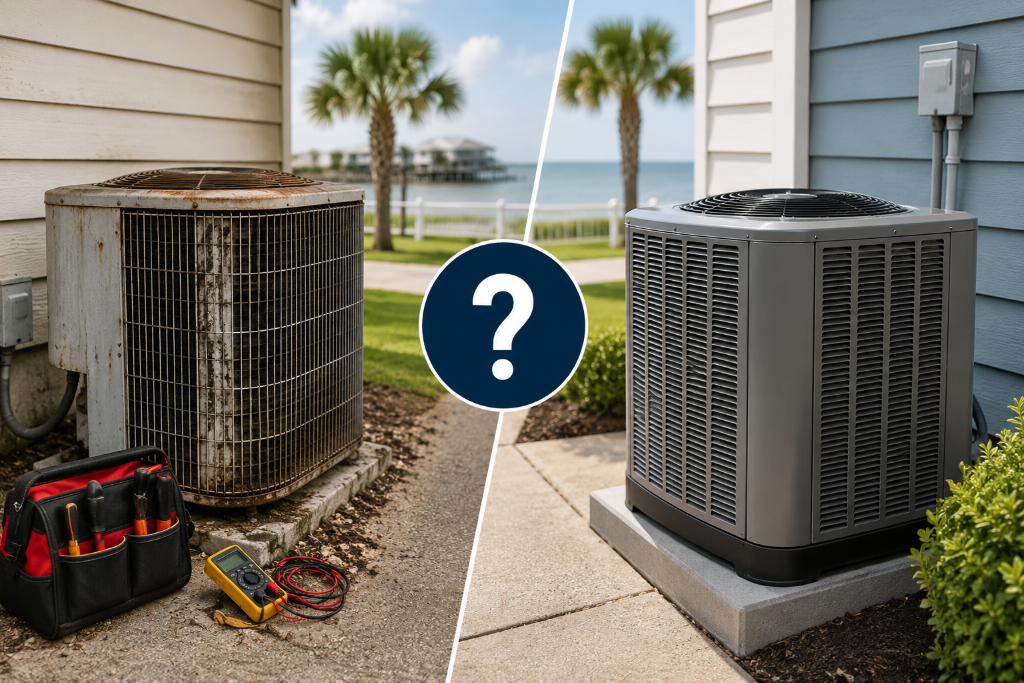
With Galveston’s unique climate, choosing the right AC is paramount. You are weighing your options between a mini-split system and central air conditioning. Understand how each system performs in our coastal environment. You will discover which cooling solution best fits your home’s specific needs and budget.
Understanding Cooling Technologies
You will discover that selecting the optimal cooling system for your Galveston residence involves understanding the core differences in how each technology operates. Your decision will impact not only your comfort but also your energy bills in the long run.
Consider the varying approaches these systems take to manage the relentless Galveston heat and humidity. You need a system that can stand up to coastal conditions while providing efficient cooling for your specific living situation.
What Is a Mini-Split System?
A mini-split system provides a ductless solution for cooling your home. This type of system allows you to cool specific rooms or zones independently, offering precise temperature control where you need it most.
You might find a mini-split ideal if your home lacks existing ductwork or if you desire greater control over individual spaces. They offer a flexible and energy-efficient option for targeted cooling.
What Is Central Air Conditioning?
Central air conditioning is engineered to cool your entire home through an interconnected system of ducts. This setup delivers consistent temperatures throughout all your living areas.
This traditional cooling method is often preferred for larger homes where ducts are already in place. It provides a uniform and comprehensive cooling experience for your whole family.
Central AC operates by distributing cooled air from a central unit through a network of vents in each room. The system pulls warm air from your home, cools it, and then recirculates the conditioned air, maintaining a comfortable temperature across the entire property.
Coastal Considerations for HVAC in Galveston
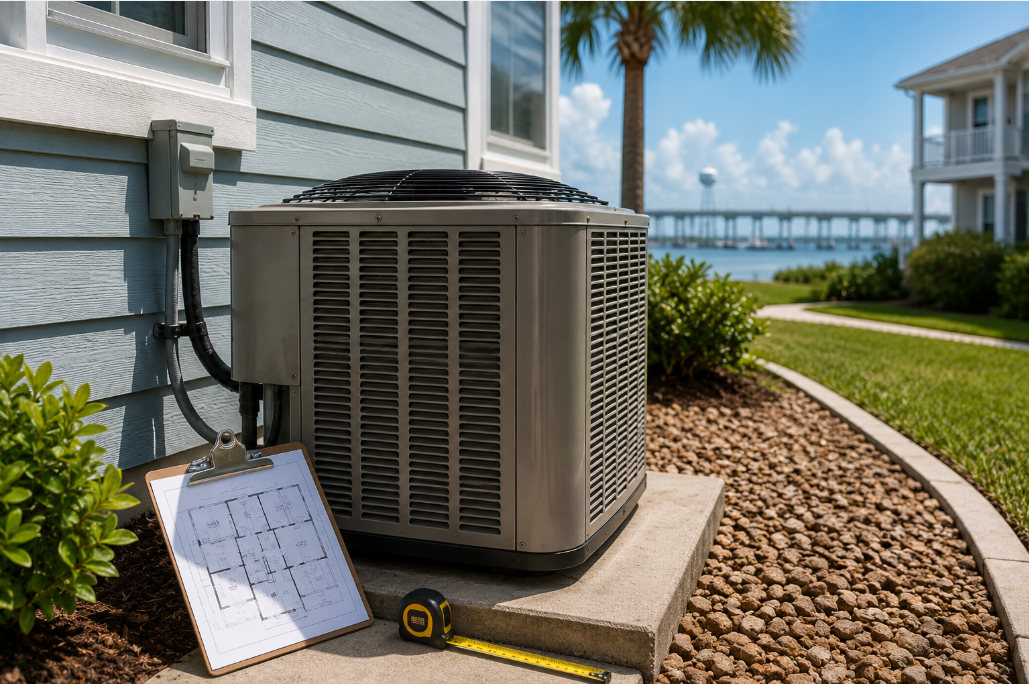
Living by the sea brings unique challenges for any home system, especially your HVAC unit. You must factor in the constant exposure to salt air and relentless humidity when selecting and maintaining your cooling solution. These environmental elements demand specific considerations to ensure your chosen system performs efficiently and has a long lifespan.
Combating Salt Air Corrosion and High Humidity
Salt particles carried by the ocean breeze can accelerate corrosion on outdoor HVAC components. You should look for units specifically designed with corrosion-resistant coatings or materials to protect against this wear. High humidity levels also force your AC to work harder to remove moisture from the air. Consider systems with excellent dehumidification capabilities to maintain comfortable indoor conditions without overworking the compressor.
Storm Resilience and Outdoor Unit Placement
Galveston faces the risk of tropical storms and hurricanes, making the placement of your outdoor unit a serious concern. You will want to ensure your chosen system’s outdoor components are installed in a location protected from potential floodwaters and high winds. Proper anchoring and elevation can make a significant difference in preventing damage during severe weather events. Your HVAC professional can advise on the best practices for securing your unit against Galveston’s unpredictable coastal weather.
Which System Works Best for Galveston Homes?
You must consider your home’s unique characteristics and your personal preferences when selecting a cooling system. A mini-split system offers targeted cooling, perfect if you desire independent temperature control for different areas or lack existing ductwork. This can lead to greater energy efficiency by only cooling occupied spaces. Conversely, central AC provides consistent, whole-home comfort through a network of ducts, a more traditional choice for larger residences. The choice truly boils down to whether you prioritize zoned control or uniform cooling throughout your entire property.
Retrofitting Historic Island Architecture
Many historic homes on Galveston Island present unique challenges for modern HVAC installations. Installing ductwork in these older structures can be complex and costly, often requiring extensive renovations that might compromise their architectural integrity. Mini-split systems offer a less invasive solution, requiring only a small hole for refrigerant lines rather than extensive ductwork. This preserves the original character of your historic property while providing efficient, comfortable cooling.
Cooling Solutions for Modern Beachfront Properties
Modern beachfront properties in Galveston often boast open layouts and contemporary designs that can accommodate various cooling systems. You might find that central AC integrates seamlessly into these homes, providing uniform cooling across expansive living areas. Alternatively, mini-splits can offer flexible zoning for multi-level homes or properties with distinct living spaces, allowing you to tailor comfort to specific areas. The architectural design of your modern home will often dictate the most aesthetically pleasing and efficient installation. Your modern beachfront property’s construction materials and insulation will also play a role in determining the most effective cooling solution. Homes built with energy efficiency in mind may benefit from the precise temperature control offered by mini-splits, optimizing energy usage. However, for properties designed with a focus on expansive, open-concept living, a well-designed central AC system can deliver consistent comfort without visual intrusions.
How to Choose the Right AC System for Your Home
You need to consider several factors when making an informed decision about your home’s cooling system. The unique characteristics of your Galveston property and your personal preferences will guide you toward the best fit.
Making the wrong choice can lead to discomfort and higher utility bills. Evaluating your specific circumstances will ensure you select an AC system that delivers optimal performance and satisfaction.
Assessing Household Size and Layout
Consider the number of occupants and how you utilize different areas of your home. A larger family might benefit from consistent whole-home cooling, while a smaller household could find zoned cooling more advantageous.
Your home’s existing ductwork, or lack thereof, plays a significant role in this assessment. Homes without ducts are often ideal candidates for ductless mini-split systems, avoiding costly installation.
Evaluating Long-Term Energy Performance Goals
You should think about your commitment to energy efficiency over time. Mini-split systems often excel in targeted cooling, allowing you to save energy by only conditioning occupied spaces.
Central AC systems, while cooling an entire home, have become increasingly efficient with newer models and proper sizing. Your desire for lower monthly bills will heavily influence this choice.
Your long-term energy performance goals extend beyond initial purchase price, encompassing ongoing operational costs and environmental impact. Investing in a system with a higher SEER rating, for example, can result in substantial savings over the lifespan of the unit, especially in Galveston’s demanding climate.
AC Installation Services in Galveston, TX
You are making a significant investment in your home’s comfort and efficiency with a new AC installation. The quality of this installation directly impacts your system’s performance and longevity, especially in Galveston’s unique coastal environment. Ensuring proper setup from the start prevents future headaches. Your chosen system needs expert handling, whether it’s a mini-split or central AC. Professional installation guarantees that your unit operates at peak efficiency, saving you money on energy bills and providing consistent cooling even during the hottest Galveston summers.
Selecting a Qualified Coastal HVAC Specialist
Finding a local HVAC contractor with experience in coastal climates is paramount. Galveston’s salt air and high humidity present specific challenges that require specialized knowledge for proper installation and material selection. Your specialist should understand these local nuances. Verify your chosen professional possesses the necessary licenses and insurance. Ask for references and read reviews to ensure they have a proven track record of reliable service and customer satisfaction in the Galveston area.
Importance of Professional Load Calculations
Properly sizing your AC system is non-negotiable for optimal performance and energy efficiency. An undersized unit will struggle to cool your home, running constantly and wasting energy, while an oversized unit will cycle on and off too frequently, leading to uneven temperatures and increased wear. A professional load calculation considers all the specific characteristics of your Galveston home. This calculation accounts for factors like your home’s square footage, ceiling height, insulation levels, window types, and sun exposure. Even the number of occupants and heat-generating appliances are considered to determine the precise cooling capacity needed. Without a precise load calculation, you risk an inefficient system that costs more to run and fails to deliver consistent comfort throughout your home.
Conclusion
Hence, choosing between a mini-split system and central AC for your Galveston home requires careful consideration of your specific circumstances. You should evaluate your home’s layout, existing infrastructure, and your desired level of zonal control. Both systems offer effective cooling, but their suitability varies significantly based on individual property characteristics and your priorities.
You can ensure optimal comfort and efficiency in Galveston’s challenging climate by making an informed decision. Consult with a qualified HVAC professional to assess your unique needs. They will guide you in selecting the system that best aligns with your budget and long-term cooling requirements.
FAQ
Q: How does Galveston’s coastal climate influence the choice between mini-split and central AC systems?
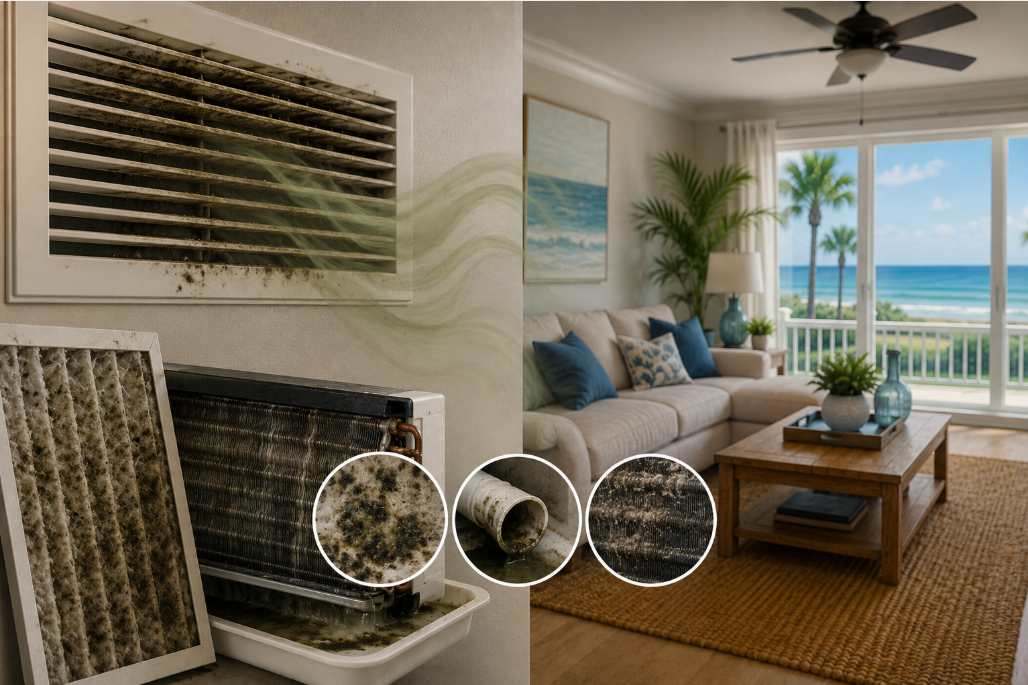
A: Galveston’s high humidity and salt-laden air are significant factors. Mini-split systems, with their individual outdoor units, can be more susceptible to salt corrosion if not properly protected or maintained. Central AC systems, with their larger outdoor condensers, also require robust corrosion-resistant coatings. Both systems need regular cleaning and maintenance to combat mold and mildew growth due to humidity. The consistent, whole-home dehumidification offered by a well-sized central AC can be a major comfort advantage in such a humid environment.
Q: For homes in Galveston without existing ductwork, is a mini-split system always the best or most cost-effective solution?
A: A mini-split system is often the most straightforward and cost-effective solution for Galveston homes lacking ductwork. Installing new ductwork for a central AC system can be expensive and disruptive, especially in older homes or those with limited attic or crawl space. Mini-splits avoid this by cooling individual zones directly. While the initial cost per unit might seem higher than a single central AC unit, the absence of duct installation costs often makes mini-splits more economical in these scenarios. You can also install units in phases, spreading out the investment.
Q: Can a mini-split system effectively cool an entire multi-room home in Galveston, or is central AC always better for whole-home cooling?
A: A multi-zone mini-split system can effectively cool an entire multi-room home in Galveston. This involves installing multiple indoor units connected to one or more outdoor compressors. Each indoor unit provides independent temperature control for its specific zone. While central AC offers a single thermostat for the entire home, a multi-zone mini-split provides zoned control, potentially saving energy by only cooling occupied rooms. The effectiveness depends on proper sizing and placement of each indoor unit to ensure adequate air circulation throughout the home.
Q: What are the long-term energy efficiency differences between mini-splits and central AC in Galveston’s climate?
A: Mini-splits generally offer superior energy efficiency for targeted cooling. Their ductless design eliminates the energy losses associated with ductwork, which can be substantial in attics or crawl spaces exposed to Galveston’s heat. Zoned cooling allows you to only condition the rooms you are using, reducing overall energy consumption. Central AC systems cool the entire home, even unoccupied areas, which can lead to higher energy bills. However, modern central AC units with high SEER ratings and variable-speed compressors can also be very efficient, especially when paired with smart thermostats that optimize operation.
Q: How does maintenance differ for mini-splits versus central AC systems in Galveston, considering the coastal environment?
A: Both systems require regular maintenance, but the specifics differ. Mini-splits need frequent cleaning of their indoor unit filters, which can get dirty quickly due to Galveston’s dust and humidity. The outdoor units require inspection for salt corrosion and debris. Central AC systems need regular filter changes for the main air handler, and the outdoor condenser coil must be kept clean. Both systems benefit from professional annual tune-ups to check refrigerant levels, electrical components, and ensure efficient operation. Given the corrosive salt air, professional cleaning and inspection of outdoor coils are particularly important for both types of systems to extend their lifespan.