Humidity on the Gulf Coast causes unique challenges for air conditioning systems. An AC system must remove both heat and moisture from the air to achieve indoor comfort. When humidity levels remain high, as they often do in Galveston County, an AC struggles to dehumidify effectively. This struggle often results in homes feeling warm and sticky, even when the thermostat is set low.
Why Gulf Coast Humidity Is So Hard on AC Systems
The unique climate of the Gulf Coast presents a persistent challenge for air conditioning units. Even as temperatures drop slightly after sunset, the air remains thick with moisture, demanding more from HVAC systems than just temperature reduction.
This constant battle against high humidity forces AC units to work overtime, often leading to increased energy consumption and a lingering sense of discomfort indoors, despite the thermostat setting.
Understanding Latent Heat vs. Sensible Heat Loads
Air conditioning systems contend with two types of heat: sensible and latent. Sensible heat is the heat that directly affects the air’s temperature, the kind a thermometer measures.
Latent heat, however, refers to the energy required to change the state of water from vapor to liquid, which is the process of dehumidification. On the Gulf Coast, the latent heat load often far exceeds the sensible heat load.
How High Dew Points Impact Evaporator Coil Efficiency
High dew points on the Gulf Coast mean the air holds a significant amount of moisture. This elevated moisture content directly impacts the efficiency of an AC unit’s evaporator coil.
The coil must condense more water vapor to dehumidify the air, a process that consumes a considerable portion of the system’s cooling capacity.
This increased condensation demand can lead to the evaporator coil working harder and less efficiently. The system expends more energy on removing moisture rather than solely cooling the air, which can result in less effective temperature control and higher utility bills. When the coil is heavily burdened with condensation, it struggles to transfer heat effectively from the air, further diminishing its cooling power.
Common Reasons Your AC Struggles on Humid Nights
Several factors contribute to an AC system’s reduced effectiveness in highly humid environments. These issues often prevent the unit from adequately removing moisture, even if it appears to be cooling the air. Addressing these underlying problems can significantly improve indoor comfort. Understanding these common pitfalls helps homeowners identify why their Galveston home might feel damp despite continuous AC operation. Each factor impacts the system’s ability to dehumidify, leading to that uncomfortable, clammy sensation.
Equipment Oversizing and the Problem of Short-Cycling
An AC unit that is too large for the space it cools presents a unique challenge in humid climates. Such systems quickly lower the air temperature to the thermostat setting, then shut off. This rapid cooling, known as short-cycling, prevents the system from running long enough to properly extract moisture from the air. The result is a cool but still very humid indoor environment.
Restricted Airflow and Clogged Condensate Drain Lines
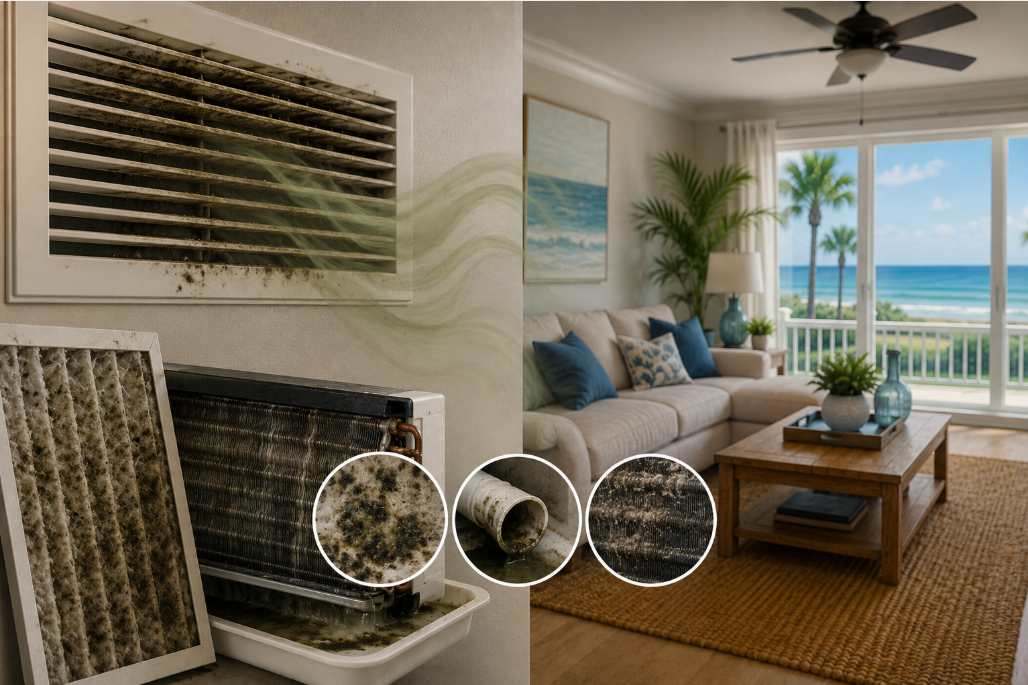
Dirty evaporator coils or clogged air filters severely restrict the airflow through the system. This impediment reduces the AC’s capacity to absorb heat and moisture from the indoor air. A blocked condensate drain line prevents the collected humidity from exiting the system. Water can then back up, sometimes causing the system to shut down or reduce its efficiency in moisture removal. When the condensate drain line is clogged, the water that the AC system has removed from the air has no place to go. This can lead to water overflowing into the drain pan, which often triggers a safety switch that turns off the unit to prevent water damage. Even if the unit continues to run, the backed-up water reduces the system’s ability to remove additional humidity, exacerbating the problem of a damp-feeling home.
Signs Your Home Has a Humidity Problem
Several indicators suggest a home may be struggling with excessive moisture, particularly in coastal environments. Recognizing these signs early can help homeowners address the underlying issues before they escalate, ensuring greater comfort and efficiency. Identifying these common problems allows residents to take proactive steps toward restoring their home’s internal balance. An understanding of these tell-tale signs is key to maintaining a healthy and comfortable living space.
Identifying Visible Condensation and Musty Odors
Observable moisture around vents or windows often signals that humidity levels are too high. This condensation forms when warm, moist air meets cooler surfaces, indicating the air conditioning system is not effectively removing moisture. A distinct musty smell, particularly in certain rooms or areas like closets, points to mold or mildew growth. These odors are a direct consequence of sustained high humidity, creating an ideal environment for microbial proliferation.
Recognizing the “Clammy” Feeling Despite Low Thermostat Settings
Many homeowners experience a persistent sticky or clammy sensation indoors, even when the thermostat is set to a seemingly cool temperature like 72 degrees. This uncomfortable feeling is a direct result of high indoor humidity, where the air holds too much moisture. This sensation occurs because the body struggles to cool itself through evaporation when the air is already saturated with water vapor. The air conditioning system may be lowering the temperature, but it is failing to adequately dehumidify the space. The “clammy” feeling is a clear indication that the air conditioning system, while cooling the air, is not effectively performing its crucial secondary function of moisture removal. This often happens because the system is oversized, leading to short cycling where it shuts off before it has a chance to properly dry the air.
Solutions for Galveston County Homeowners
Homeowners in coastal regions face unique moisture challenges that demand specific HVAC strategies. Addressing these issues often requires more than just a thermostat adjustment; it involves a comprehensive approach to system optimization and potentially, targeted equipment upgrades.
Specialized HVAC service, focused on performance and efficiency, can restore comfort and balance to Galveston homes. Technicians can diagnose underlying problems like improper system sizing, restricted airflow, or leaky ductwork, ensuring the AC effectively tackles both heat and humidity.
Benefits of Integrating Whole-Home Dehumidification
Installing a whole-home dehumidifier offers a dedicated solution for persistent humidity problems. This specialized equipment works independently or in conjunction with the existing AC system to extract excess moisture from the air.
Such a system helps maintain indoor humidity levels within the comfortable range of 45-55%, even when the AC isn’t actively cooling. This results in a consistently drier, more comfortable indoor environment, reducing the clammy feeling often associated with Gulf Coast nights.
Optimizing Blower Speeds for Enhanced Moisture Removal
Adjusting the blower speed on an AC system can significantly impact its dehumidification capabilities. Slower blower speeds allow air to spend more time passing over the cold evaporator coil, enabling more moisture to condense and drain away.
This subtle adjustment can prevent the short cycling common with oversized units, ensuring the system runs long enough to effectively remove humidity. A slower, continuous fan operation often provides superior dehumidification compared to rapid, intermittent bursts of cooling.
Variable-speed blower motors offer the greatest flexibility in optimizing airflow for moisture removal. These advanced motors can precisely control the amount of air moving across the coil, allowing the system to operate at lower speeds specifically for dehumidification without overcooling the space. This precise control helps maintain a consistent indoor temperature while actively battling the pervasive humidity, leading to improved comfort and potentially lower energy consumption.
Why Coastal Homes Require Performance-Focused HVAC Service
Homeowners along the Gulf Coast confront unique challenges that demand specialized attention for their HVAC systems. The relentless humidity and corrosive salt air create an environment where standard maintenance often falls short, leading to accelerated wear and reduced efficiency. Proper system diagnostics and tailored service plans are therefore necessary to ensure these critical comfort systems operate reliably and effectively, maintaining optimal indoor conditions despite external pressures.
Mitigating Salt-Air Corrosion on Critical Components
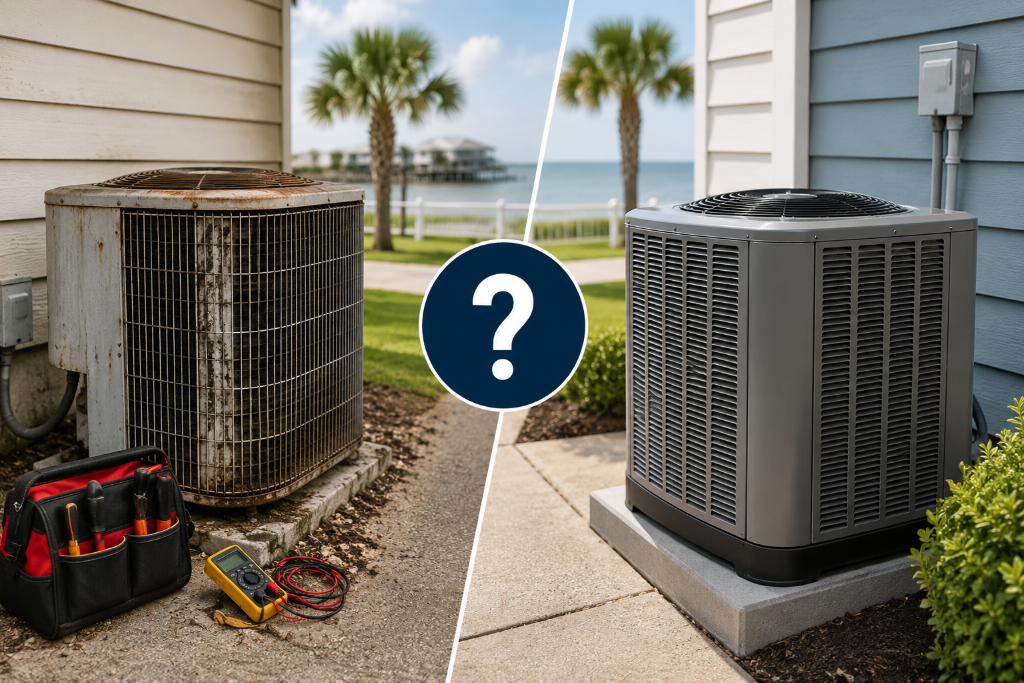
Salt particles carried on the coastal breeze can silently attack the metal components within an AC unit. This insidious corrosion can degrade coils, electrical connections, and the outdoor unit’s casing, significantly shortening the system’s lifespan. Regular inspection and protective treatments applied by experienced technicians can create a barrier against this environmental threat, preserving the integrity of expensive equipment.
The Importance of Precision Refrigerant Charging for High-Load Environments
Accurate refrigerant levels are absolutely critical for any AC system, but especially so in the demanding Gulf Coast climate. An improperly charged system will struggle to remove both heat and humidity, leading to increased energy consumption and reduced comfort. Technicians must use precise measurements and specialized tools to ensure the refrigerant charge perfectly matches the manufacturer’s specifications for optimal performance. Even a slight undercharge or overcharge can dramatically impact a system’s ability to cool and dehumidify effectively, making precise calibration a key factor in achieving both comfort and efficiency in high-humidity, high-load environments. This meticulous approach prevents premature component failure and helps maintain the desired indoor climate consistently.
Conclusion
With this in mind, homeowners along the humid Gulf Coast face unique challenges in maintaining indoor comfort. An air conditioning system’s ability to effectively remove both heat and moisture directly impacts the living experience. Recognizing the signs of high indoor humidity, such as persistent dampness or musty odors, helps pinpoint issues beyond just temperature control. Solutions often involve a multifaceted approach, addressing factors from system sizing to routine maintenance.
Properly functioning HVAC systems are necessary for coastal homes to achieve optimal comfort and efficiency. Understanding the specific ways humidity impacts air conditioning performance empowers residents to make informed decisions about their home’s climate control. Addressing these issues ensures a cooler, drier, and more balanced indoor environment throughout the year. Contact us at Alex’s Air Conditioning for an HVAC checkup to ensure your system is functioning properly before the hot summer months.
Q: Why does my AC struggle so much with humidity on Gulf Coast nights, even when it’s not extremely hot?
A: Your air conditioning system performs two main functions: cooling the air and removing moisture. On the Gulf Coast, humidity levels remain high even after sunset. Your AC has to work harder to condense and drain this excess moisture from the air. While the outdoor temperature might drop, the air’s moisture content often stays elevated. This means your system spends more energy and time trying to dehumidify your home, which can make it feel less effective at cooling, even if the thermostat reads a lower temperature. The sensation of discomfort often comes from the stickiness of the air rather than just the heat.
Q: My AC runs constantly but my house still feels clammy. What could be causing this persistent dampness indoors?
A: Several factors can contribute to a persistently damp feeling indoors despite your AC running. An oversized air conditioning system is a common culprit; it cools your home too quickly and then shuts off before it has adequately removed moisture from the air. Dirty evaporator coils can’t absorb heat and moisture efficiently, reducing dehumidification. Restricted airflow, often due to clogged filters or blocked vents, prevents proper air circulation and moisture removal. Leaky ductwork can pull in humid air from unconditioned spaces like attics or crawl spaces, introducing more moisture into your home. Older AC units may also lose their ability to effectively manage humidity over time. Any of these issues can cause your system to run inefficiently, leaving your home feeling sticky.
Q: What are the common signs that my AC system isn’t effectively handling the humidity in my Galveston County home?
A: You can observe several indicators that your AC system is struggling with humidity. Condensation around your air vents or windows is a clear sign of excessive indoor moisture. Musty odors, particularly in specific rooms or when the AC turns on, often point to humidity issues that can encourage mold growth. If your indoor humidity levels consistently measure above 55-60%, your system isn’t keeping up. You might also notice higher electric bills because your AC is working harder than it should to achieve comfort. A house that feels damp or clammy, even when your thermostat is set to a cool temperature like 72 degrees, indicates a significant humidity problem. These signs suggest your AC is not adequately balancing temperature and moisture.
Q: Can routine maintenance help my AC system better manage the intense Gulf Coast humidity?
A: Yes, routine maintenance is highly effective in improving your AC system’s ability to manage Gulf Coast humidity. Regular cleaning of evaporator and condenser coils ensures maximum heat and moisture transfer. Technicians can check and clear condensate drains, preventing backups that can lead to increased indoor humidity and water damage. They will also inspect and clean air filters, which is imperative for maintaining proper airflow. Airflow adjustments, such as balancing registers, can help distribute conditioned, dehumidified air more evenly. A well-maintained system operates at its peak efficiency, allowing it to remove more moisture from the air and keep your home feeling drier and more comfortable. Preventative service also helps identify potential issues before they escalate, saving you from more extensive repairs later.
Q: What are some specific solutions for homes in areas like Galveston Island or League City that face extreme humidity challenges?
A: Homes in high-humidity areas like Galveston Island or League City can benefit from several targeted solutions. Ensuring your AC system is properly sized for your home is critical; an undersized unit won’t keep up, while an oversized unit will short cycle and fail to dehumidify. Upgrading to variable-speed HVAC equipment allows the system to run longer at lower speeds, providing consistent cooling and significantly better dehumidification. Installing a whole-home dehumidifier, integrated with your existing HVAC system, offers dedicated moisture removal, independent of cooling demands. Sealing leaky ductwork prevents humid air infiltration. Insulating your attic and walls can also reduce heat and moisture transfer into your living space. Consider smart thermostats with humidity sensors to fine-tune your comfort settings. These solutions, often combined, provide a comprehensive approach to combating coastal humidity.