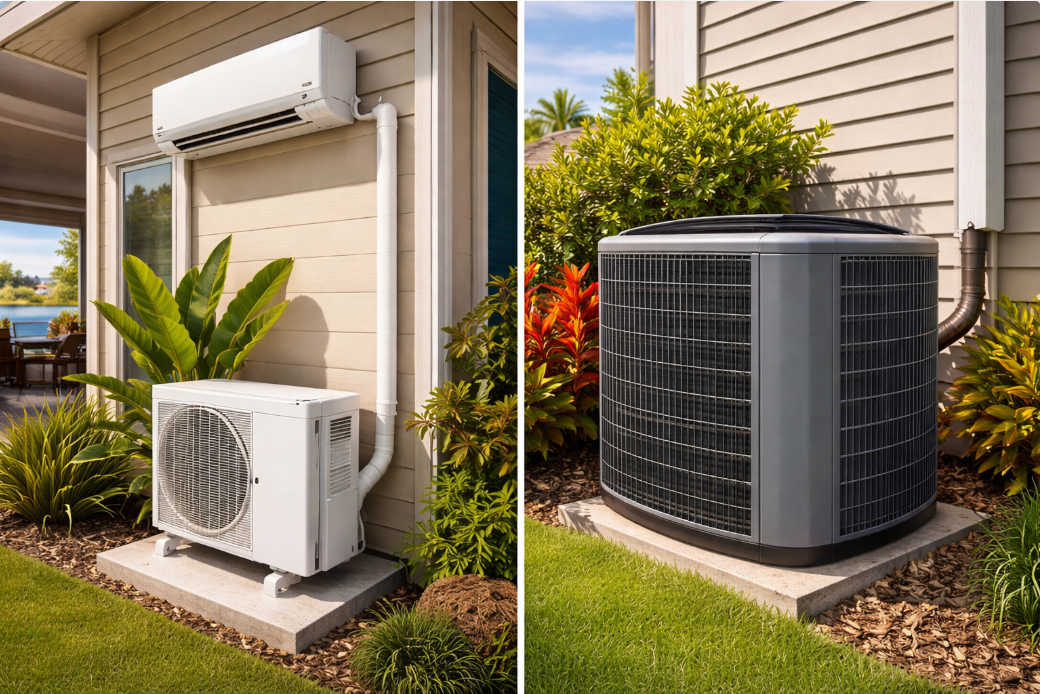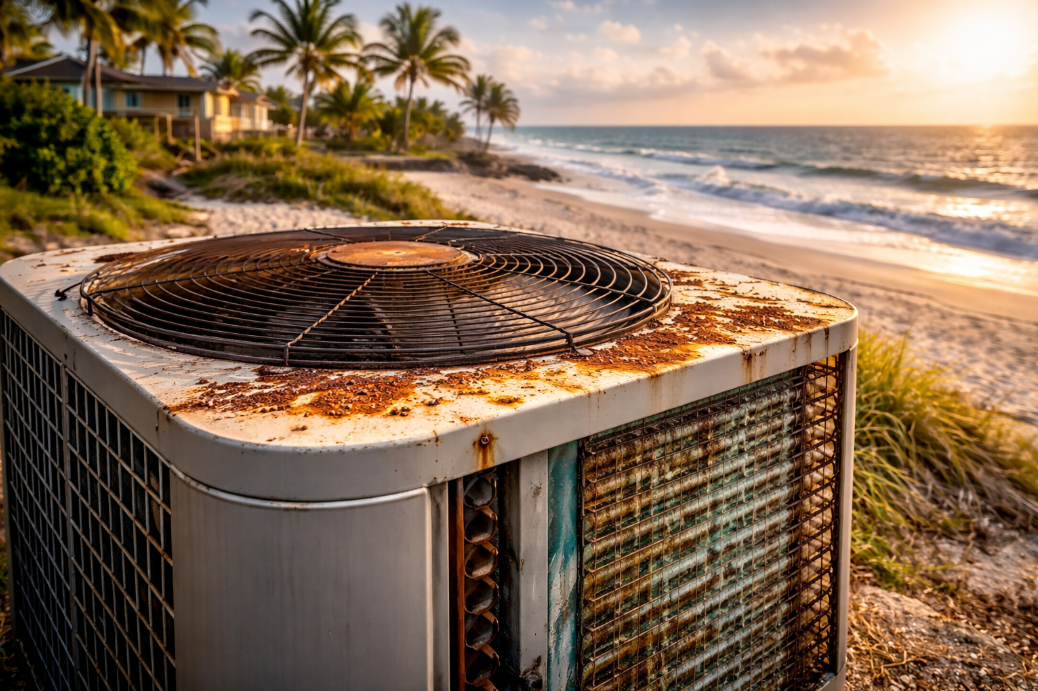
With Galveston’s coastal charm, you also face a unique challenge for your AC. You’ll find that the salty, humid air significantly accelerates corrosion in your system. This corrosive environment rapidly deteriorates metal components, leading to reduced efficiency and more frequent breakdowns for your home’s cooling.
Why Coastal Air Causes AC Corrosion
You may wonder why coastal air poses such a threat to your AC system. The air in Galveston carries microscopic salt particles from the Gulf, which combine with ambient moisture to form a highly corrosive electrolyte solution.
This saline-rich environment constantly bathes your outdoor unit, initiating and accelerating chemical reactions that break down metal components. Your AC unit, designed with various metals, becomes a prime target for this relentless attack.
The Electrolysis Process in Saline Environments
The presence of salt and moisture creates an ideal condition for electrolysis. This electrochemical process involves the transfer of electrons between different metals in the presence of an electrolyte, leading to the degradation of one or more metals.
Essentially, your AC unit becomes a battery, where dissimilar metals, salt, and water trigger a destructive current. This current slowly but surely eats away at the metal, forming rust and other corrosive byproducts.
Why Copper and Aluminum are Particularly Vulnerable
Many AC components, especially condenser coils, are made from copper and aluminum. These metals, while excellent for heat transfer, are highly reactive to the corrosive coastal air.
Salt particles quickly adhere to their surfaces, creating localized corrosion sites that rapidly spread. This leads to pitting and thinning of the coil fins and tubing, compromising their structural integrity and efficiency.
The reactivity of copper and aluminum in a saline environment means that the protective oxide layers these metals naturally form are quickly broken down. This exposes fresh metal to the corrosive elements, accelerating the decay process and leading to refrigerant leaks and reduced cooling capacity.
The Synergistic Effect of Salt and Industrial Pollutants
Galveston’s coastal location also places it near industrial areas, adding another layer of complexity. Industrial pollutants, such as sulfur dioxide and nitrogen oxides, combine with salt and moisture to create an even more aggressive corrosive cocktail.
These airborne chemicals amplify the corrosive effects of salt, attacking your AC unit with increased ferocity. Your system faces a double assault, dramatically shortening its lifespan and increasing maintenance needs.
The combination of these elements creates a particularly harsh environment where the pollutants act as catalysts, accelerating the electrochemical reactions initiated by the salt. This synergistic effect means that the damage your AC experiences is far greater than what either salt or industrial pollutants would cause individually.
How Salt Air Damages Your AC System
You might wonder exactly how these salt particles impact your AC unit. The corrosive nature of salt-laden air relentlessly attacks various components, leading to a cascade of efficiency losses and eventual system failure. Each part of your outdoor unit faces unique challenges from the coastal environment. This constant exposure to a corrosive atmosphere means your system works harder and wears out faster. Understanding these specific vulnerabilities helps you appreciate the need for proactive protection.
Degradation of Condenser Coils and Heat Exchange Fins
Your condenser coils and heat exchange fins are particularly susceptible to salt corrosion. These delicate metal surfaces, often made of aluminum or copper, are designed for optimal heat transfer. Salt deposits create an abrasive layer that hinders this critical function. The corrosive action literally eats away at the metal, forming pits and flakes. This damage reduces the coil’s ability to dissipate heat, forcing your AC to run longer and consume more energy to achieve the desired cooling.
Pitting Corrosion in Copper Refrigerant Lines
Copper refrigerant lines, while durable, are not immune to the effects of salt air. Microscopic salt particles combine with moisture to initiate localized corrosion. This process creates tiny, deep pits on the copper surface. These pits compromise the integrity of the refrigerant lines, eventually leading to refrigerant leaks. A leaking system loses its cooling capacity and can cause severe damage to the compressor if not addressed promptly. A small pinhole leak in a refrigerant line can drastically reduce your system’s efficiency and lead to expensive repairs. The refrigerant, vital for the cooling cycle, slowly escapes, diminishing performance until the unit can no longer cool effectively.
Structural Integrity Loss in the Outer Cabinet and Brackets
The outer cabinet and internal mounting brackets of your AC unit also suffer from salt corrosion. These metal structures, typically steel, begin to rust and weaken over time. The structural components lose their strength, affecting the unit’s stability. Rust can spread rapidly, compromising welds and fasteners. This deterioration can lead to loose panels, rattling noises, and even the eventual collapse of support brackets. A corroded outer cabinet not only looks unsightly but also exposes internal components to further environmental damage. Weakened brackets can cause vibrations and misalignment, putting additional stress on the entire system.
The Role of High Humidity in Accelerating Metal Decay
High humidity levels, a constant companion of Galveston’s coastal air, play a significant role in the rapid degradation of your AC unit. The air’s moisture content acts as a direct participant in the chemical reactions that lead to corrosion.
You might notice how quickly metal objects tarnish or rust in such an environment. This accelerated decay isn’t merely due to the presence of water vapor, but rather its interaction with other corrosive elements.
How Moisture Acts as a Catalyst for Rapid Oxidation
Water molecules provide the medium necessary for electrochemical reactions to occur on metal surfaces. Without sufficient moisture, the corrosive salt particles in the air would have a much slower impact on your AC’s components.
This moisture vitally “activates” the salt, allowing it to dissolve and form an electrolyte solution. The presence of this solution then dramatically speeds up the oxidation process, commonly known as rusting.
The “Wet-Dry” Cycle and Salt Crust Formation
The fluctuating conditions in Galveston, where humidity levels rise and fall, create a particularly damaging “wet-dry” cycle. Your AC unit’s coils and metal surfaces are constantly exposed to periods of high moisture followed by drying.
Each time the moisture evaporates, it leaves behind concentrated salt deposits. These salt crystals then form a crust, trapping moisture underneath and creating localized corrosive hotspots.
This cycle continuously exposes your system to fresh salt particles, which then get dissolved and left behind, further building up the corrosive layers. The constant re-wetting and drying prevents the formation of any stable protective layer on the metal, leaving it vulnerable to ongoing attack.
Impact on Internal Electrical Components and Circuitry
Moisture doesn’t just affect the external metal casing and coils; it also poses a serious threat to your AC’s internal electrical components. High humidity can lead to condensation forming within the unit, even on sensitive circuit boards.
This moisture can cause short circuits, leading to erratic operation or complete system failure. Over time, the corrosive effects of salt-laden moisture can also degrade wiring and connections, impacting the unit’s overall reliability.
You might experience intermittent issues with your thermostat or cooling performance as these internal components slowly succumb to the effects of the humid, salty air. The tiny electrical connections and delicate circuitry are not designed to withstand such harsh conditions without proper protection.
Signs Your AC Is Suffering from Coastal Corrosion
You may wonder how to identify if your AC system is succumbing to the harsh Galveston coastal environment. Recognizing these signs early allows you to address issues before they escalate into major breakdowns.
Observing specific indicators on your outdoor unit can provide clear evidence of corrosive damage. Pay close attention to changes in performance and the physical appearance of key components.
Visible White Powdery Residue on Coil Surfaces
A tell-tale sign of salt corrosion often appears as a white, powdery or crystalline substance on your AC’s condenser coils. This residue is actually salt buildup, deposited by the coastal air and moisture.
This accumulation obstructs airflow and hinders heat exchange, forcing your unit to work harder. The increased strain directly impacts efficiency and can accelerate further damage to the coil material.
Brittle or Cracking Aluminum Fins (Fretting)
You might notice the delicate aluminum fins on your condenser coil becoming unusually brittle or even cracking. This phenomenon, known as fretting, is a direct result of continuous salt exposure weakening the metal’s integrity.
These fins are critical for efficient heat dissipation, and their degradation severely compromises your AC’s ability to cool effectively. The damage often starts subtly and worsens over time.
The constant exposure to salt particles and moisture causes microscopic pitting and erosion on the aluminum surface. Over time, this weakens the metal’s structure, making it prone to cracking and breaking off with minimal contact or vibration. This loss of fin surface area significantly reduces the coil’s heat transfer capabilities, leading to reduced cooling performance.
Frequent Refrigerant Leaks and Reduced Cooling Efficiency
Experiencing frequent refrigerant leaks is a strong indicator that corrosion is compromising your AC’s internal components. Salt-induced deterioration can create pinhole leaks in the refrigerant lines and coils, allowing the cooling agent to escape.
You will also notice a significant drop in your AC’s cooling efficiency. The system struggles to maintain desired temperatures, forcing it to run longer cycles and increasing your energy bills as it works harder to compensate for lost refrigerant.
Corrosion can lead to microscopic perforations in the refrigerant lines and evaporator or condenser coils. These small holes allow refrigerant to slowly leak out, reducing the overall charge in your system. A low refrigerant charge severely impairs the AC’s ability to absorb heat from your home, resulting in warmer indoor temperatures, longer run times, and ultimately, higher electricity consumption.
Galveston’s Specific Environmental Challenges: Wind and Sand
Beyond the direct corrosive effects of salt, Galveston presents additional environmental hurdles for your AC unit. The relentless coastal winds and ever-present sand particles contribute to a more aggressive degradation process.
These natural elements combine to create a uniquely destructive environment. Understanding how these factors interact will help you better prepare your system for the challenges it faces.
How Sea Breezes Carry Salt Particles Miles Inland
Powerful sea breezes originate from the Gulf, sweeping inland with remarkable force. These winds become primary transporters of microscopic salt particles.
You may find these airborne salts depositing on surfaces far from the immediate shoreline. This widespread distribution means even AC units not directly on the beach are still susceptible to salt exposure.
The Abrasive Effect of Wind-Blown Sand on Protective Coatings
Constant gusts of wind in Galveston carry fine grains of sand. These particles act like tiny sandpaper, impacting your AC unit’s exterior.
Over time, this continuous bombardment erodes the protective coatings designed to shield metal components. The compromised surfaces then become far more vulnerable to corrosive salt.
The integrity of factory-applied paints and specialized anti-corrosion treatments suffers considerably from this abrasive action. Once these outer layers are breached, moisture and salt can directly access the underlying metal, accelerating rust and material fatigue.
Seasonal Variations: Hurricane Season and Winter Storms
Galveston’s climate experiences distinct seasonal changes that intensify the challenges for your HVAC system. Hurricane season brings extreme winds, torrential rain, and heightened salt spray.
Even outside of hurricane season, winter storms can introduce periods of unusually strong winds and increased moisture. These events deliver concentrated doses of corrosive and abrasive elements.
During hurricane season, the sheer force of the wind, coupled with heavy rain and storm surges, saturates the air with salt, pushing it further inland and depositing it with greater intensity. Winter storms, while perhaps less dramatic, still contribute to wear and tear by bringing sustained periods of high winds and damp conditions that facilitate salt adhesion and corrosion.
Economic Impact: The Cost of Neglecting Coastal AC Units
Ignoring the specific needs of your coastal AC unit can lead to substantial financial burdens. You might find yourself facing a cascade of expenses that far outweigh the cost of preventative measures, directly impacting your household budget. Protecting your investment now will save you from significant out-of-pocket costs later. The cumulative effect of neglect often manifests in higher utility bills and unexpected repair expenditures.
Shortened Lifespan: Comparison of Inland vs. Coastal Longevity
AC Unit Lifespan Comparison | Location | Typical Lifespan | | :——- | :—————- | | Inland | 15-20 years | | Coastal | 7-10 years | You might observe your AC unit in Galveston lasting only half as long as one installed further inland. The constant corrosive attack from salt air dramatically reduces the operational years of your system. This accelerated aging means you are replacing your entire unit much sooner than anticipated, doubling your long-term investment.
Rising Energy Bills Due to Heat Exchange Inefficiency
Corrosion on your condenser coils directly impedes the system’s ability to transfer heat effectively. This forces your AC to work harder and longer to achieve the desired cooling, consuming more electricity. Your monthly energy statements will reflect this struggle with noticeably higher charges. A corroded coil cannot efficiently release heat, making your unit less effective and more expensive to operate. A dirty or corroded coil specifically prevents the refrigerant from dissipating heat into the outside air. The AC unit then runs almost continuously, attempting to reach the thermostat setting. This prolonged operation directly translates into a significant increase in your electricity consumption and, consequently, your energy bills.
Premature Replacement Costs and Emergency Repair Fees
Ultimately, a neglected coastal AC unit will succumb to the elements, requiring a full replacement much sooner than expected. This major expense often comes without warning, creating financial stress. You could also face frequent emergency repair calls as components fail under the corrosive strain. These urgent service visits typically carry premium charges, adding to your overall costs. When your AC unit fails completely due to corrosion, you face the substantial cost of purchasing and installing an entirely new system. This can easily run into thousands of dollars, a significant unplanned expenditure. Furthermore, the likelihood of breakdowns increases with neglect, leading to emergency repairs that often incur higher labor rates and expedited part costs. You may find yourself paying a premium to restore cooling quickly during the peak summer heat.
How to Prevent AC Corrosion in Galveston Homes
Protecting your AC system from the relentless coastal air requires a proactive approach. You can significantly extend your unit’s lifespan and maintain its efficiency by implementing a few straightforward strategies. These methods will help you mitigate the corrosive effects of salt and moisture, saving you from frequent breakdowns and expensive repairs. Regular maintenance, coupled with smart preventative measures, forms your best defense against the harsh Galveston environment. You have the power to keep your cooling system running smoothly and effectively for years to come, ensuring comfort in your home.
Routine Rinsing Procedures for Condenser Units
Gently rinsing your outdoor condenser unit is a simple yet powerful defense against salt buildup. You should perform this task regularly, especially after strong winds or heavy fog, which can deposit more salt particles onto the coils. Use a garden hose with a gentle spray, never a high-pressure washer, to avoid damaging delicate fins. Ensure you rinse all sides of the unit, allowing the water to flush away accumulated salt and debris. This quick procedure helps prevent the corrosive salt from adhering to metal surfaces, keeping your coils cleaner and more efficient.
Strategic Placement and Shielding of Outdoor Equipment
Consider the location of your outdoor AC unit carefully when planning installation or replacement. You want to place it in an area that offers natural protection from direct sea spray and prevailing winds, if possible. Even a slight obstruction can make a big difference in reducing salt exposure. Implementing physical barriers or enclosures can further shield your unit from the elements. A well-designed cover or strategically placed landscaping can deflect salt-laden air, significantly reducing the corrosive impact on your equipment. Locating your AC unit on the leeward side of your home, or behind a fence or dense shrubbery, can provide a natural buffer against the direct onslaught of coastal winds carrying salt particles. This strategic positioning minimizes the amount of corrosive air that directly contacts your condenser coils and other metal components.
Utilizing Corrosion-Resistant Mounting and Hardware
Selecting the right materials for installation is just as important as the unit itself. You should insist on corrosion-resistant mounting brackets, screws, and other hardware to secure your outdoor unit. Standard galvanized steel often succumbs to salt corrosion quickly, leading to instability and potential damage. Stainless steel or specially coated fasteners provide superior resistance to the harsh coastal environment. These materials prevent rust from spreading to the unit’s frame and ensure your AC remains securely mounted for years. Using stainless steel bolts, screws, and brackets specifically designed for marine or coastal environments will provide an extra layer of protection. These specialized fasteners resist the electrochemical reactions that accelerate corrosion in standard metals when exposed to salt and moisture, ensuring the structural integrity of your AC installation.
Advanced Protective Measures: Coastal Grade Units and Coatings
Protecting your AC system in a coastal environment demands specialized solutions beyond standard maintenance. You can significantly extend your unit’s lifespan and efficiency by understanding and implementing advanced protective measures designed for corrosive conditions. These options offer enhanced durability against the relentless assault of salt-laden air. You will find that investing in these specialized protections can save you from frequent repairs and premature system replacement. Considering the unique challenges of Galveston’s climate, these proactive steps become an investment in your home’s comfort and your financial well-being.
- Advanced HVAC Protection Strategies
Protective Coatings Apply specialized phenolic or epoxy coatings to coils and metal components. Coastal-Grade Units Install “Seacoast” or marine-grade HVAC systems engineered for salt exposure. Sacrificial Anodes Utilize zinc or magnesium anodes to protect metal parts from galvanic corrosion.
Benefits of Phenolic and Epoxy Coil Coatings
Applying specialized coatings to your AC coils offers a significant barrier against corrosion. These phenolic and epoxy finishes create a protective layer that isolates the metal from direct contact with salt and moisture, which are primary contributors to rust and deterioration. The durability of these coatings means your coils remain intact longer, maintaining their heat transfer efficiency. You will notice your system performs better and experiences fewer breakdowns associated with coil degradation.
Investing in “Seacoast” or Marine-Grade HVAC Models
Choosing an HVAC unit specifically designed for coastal environments provides inherent protection from the start. These “Seacoast” or marine-grade models incorporate materials and construction techniques that are inherently more resistant to salt corrosion than standard units. Manufacturers build these systems with enhanced components, such as thicker gauge metals, specialized fasteners, and advanced coil designs. You gain a system engineered to withstand the harsh realities of Galveston’s salty air, offering superior longevity and performance. These specialized units often feature components like corrosion-resistant cabinetry, coated circuit boards, and internally protected wiring. You are vitally installing a system built to endure, reducing the likelihood of premature failure due to environmental stress. This upfront investment translates into fewer service calls and a more reliable cooling experience over many years.
The Role of Sacrificial Anodes in HVAC Protection
Sacrificial anodes offer a clever electrochemical solution to protect your HVAC unit’s metal components. These anodes, typically made of zinc or magnesium, are more reactive than the metals in your AC system in Galveston. When exposed to an electrolyte, like salty moisture, they corrode preferentially. Your AC’s critical metal parts, such as the condenser coil and casing, remain protected as the anode “sacrifices” itself. You can easily replace these anodes periodically, ensuring continuous protection for your more expensive HVAC components. This process, known as cathodic protection, prevents galvanic corrosion by diverting the corrosive action away from your HVAC unit. Think of it as a dedicated protector for your AC’s metal, ensuring that the salt and moisture attack the anode instead of your system. Regularly checking and replacing these inexpensive anodes can save you from costly repairs on other parts of your unit.
How Often Should You Service Your AC in Coastal Texas?
Protecting your AC system in a coastal environment demands a more rigorous maintenance schedule than inland properties. You should consider your proximity to the Gulf and the constant salt exposure when planning your preventative care. Regular attention helps mitigate the corrosive effects of the Galveston air.
Maintaining your AC system with consistent service becomes a proactive defense against premature failure. You will find that a well-maintained unit not only lasts longer but also operates more efficiently, saving you money on energy bills and avoiding unexpected breakdowns.
Recommended Monthly Homeowner Inspections
You can perform several simple checks monthly to keep your system performing optimally. Gently rinse the outdoor condenser unit with fresh water to remove accumulated salt. This quick step prevents salt crystals from embedding and causing damage.
Inspect the outdoor unit for any visible signs of rust or debris, and clear away any foliage that might obstruct airflow. You should also ensure your indoor air filters are clean, replacing them as needed to maintain good airflow and indoor air quality.
Bi-Annual Professional Tune-Ups for Coastal Properties
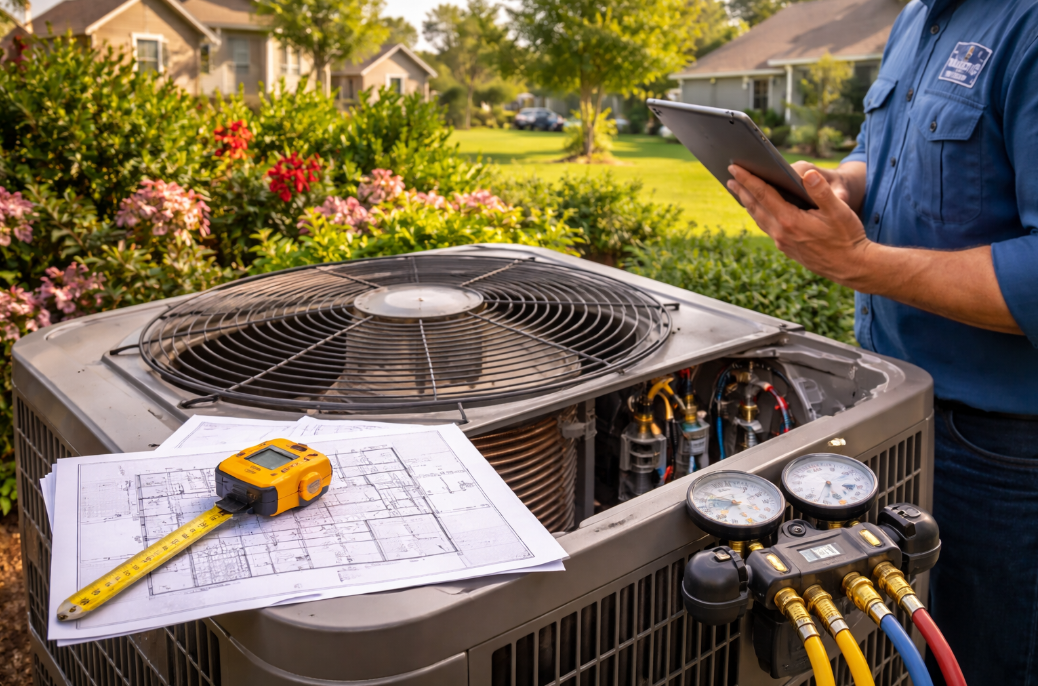
Scheduling professional tune-ups twice a year is highly recommended for coastal homeowners. These comprehensive inspections by certified technicians address potential issues before they escalate. Professionals can identify and treat corrosion on coils and electrical connections.
Technicians will clean coils, check refrigerant levels, inspect electrical components, and ensure all moving parts are lubricated. This preventative care extends the lifespan of your unit and maintains its efficiency, which is especially important in the harsh coastal climate.
During these bi-annual visits, technicians can also apply specialized anti-corrosion coatings to vulnerable metal components. This extra layer of protection significantly slows down the salt-induced deterioration process, safeguarding your investment against the relentless coastal elements.
Adjusting Maintenance Schedules Based on Proximity to the Beach
Your exact maintenance frequency should also consider how close your property is to the immediate coastline. Homes directly on the beach or within a few blocks experience higher salt concentrations. You might need even more frequent inspections.
Properties further inland, such as those in League City or Texas City, still benefit from bi-annual maintenance but may not face the same extreme corrosion rates as beachfront homes. You should discuss your specific location with your HVAC professional to tailor a plan.
A home just a block or two from the Gulf will likely benefit from more frequent rinsing and perhaps even quarterly professional checks, especially during peak cooling seasons. This personalized approach ensures your AC receives the precise level of protection it needs against the unique challenges of its environment.
DIY Maintenance vs. Professional Coastal Care
Protecting your AC in a corrosive coastal environment requires consistent effort. You might wonder which tasks you can handle yourself and when to call in a professional.
Understanding the difference between routine homeowner care and specialized technician services will save you time and money, extending your unit’s lifespan.
Safe Cleaning Techniques for Homeowners
Gently rinsing your outdoor unit regularly helps remove salt buildup before it can cause significant damage. Use a standard garden hose with moderate pressure, spraying from the top down.
Always ensure the power to your unit is off at the breaker before any cleaning. This simple step prevents electrical hazards and keeps you safe.
When to Call a Specialist for Chemical Coil Cleaning
Stubborn grime and deeply embedded salt often require more than a simple rinse. Professional technicians use specialized chemical cleaners designed to safely dissolve corrosive deposits without harming your coils.
A professional’s expertise ensures the correct chemicals are applied, protecting your system’s delicate components from damage. They also have the tools to access hard-to-reach areas.
You should call a specialist for chemical coil cleaning when you notice a significant drop in cooling efficiency, even after rinsing, or if visible corrosion has begun to form on your coils. Technicians possess the safety equipment and knowledge to handle potent cleaning agents safely and effectively, preventing harm to both themselves and your AC unit. Their thorough cleaning methods can restore optimal heat transfer, improving your system’s performance and energy efficiency.
Risks of Improper Maintenance in High-Salt Environments
Attempting complex repairs or using incorrect cleaning agents can accelerate corrosion rather than prevent it. You risk voiding warranties and causing more expensive damage.
Incorrectly cleaning electrical components or forcing debris can lead to system malfunctions and complete breakdowns. Professional knowledge is invaluable in these delicate areas.
Improper maintenance in high-salt environments presents several serious risks. Using the wrong cleaning chemicals or techniques can strip away protective coatings, exposing metal components to even faster corrosion. You might inadvertently damage delicate fins, reducing airflow and efficiency. Furthermore, neglecting proper safety precautions during DIY attempts can lead to electrical shocks or other injuries. These mistakes can quickly escalate minor issues into major, costly repairs or even necessitate premature system replacement, negating any initial savings you hoped to achieve.
Why Coastal HVAC Expertise Matters in Galveston County
Selecting an HVAC technician who truly understands Galveston’s unique environment makes all the difference for your system’s longevity. You need professionals who are intimately familiar with the specific challenges salt air presents to air conditioning units. Their specialized knowledge translates directly into more effective maintenance and repair strategies. Trusting local experts ensures your HVAC system receives care tailored to combat rapid corrosion and wear. They possess the experience to recommend appropriate protective measures and materials, saving you from recurring issues and unexpected costs down the line.
Understanding Local Building Codes and Regulations
Adhering to local building codes is absolutely necessary for any HVAC installation or major repair in Galveston County. You risk costly fines and potential safety hazards if your system doesn’t meet these specific requirements. Your chosen HVAC provider should be well-versed in all Galveston-specific regulations, ensuring every aspect of their work is compliant. This includes proper drainage, electrical standards, and even hurricane-resistant mounting for outdoor units.
Knowledge of Galveston’s Specific Microclimates
Recognizing that Galveston isn’t uniform in its exposure levels is key to effective HVAC care. You’ll find that homes directly on the beachfront face different challenges than those a few blocks inland or further north in League City. A skilled technician understands these subtle variations in salt exposure and humidity, allowing them to provide a truly customized service. They can assess your specific location and recommend targeted solutions to protect your AC unit most effectively. This nuanced understanding means that while a general rinse might be sufficient for some properties, others may require more frequent, specialized cleaning protocols or advanced anti-corrosion treatments due to their immediate proximity to the Gulf. Your AC’s placement relative to prevailing winds and the shoreline significantly impacts its long-term health.
Specialized Tools and Chemicals for Salt Remediation
Effective salt remediation requires more than just a garden hose; it demands specialized equipment and cleaning agents. You need technicians who utilize professional-grade solutions designed to neutralize and remove corrosive salt deposits without damaging delicate components. These specialized tools allow for thorough cleaning of coils and internal components, reaching areas that standard cleaning methods miss. Investing in this specialized service ensures deeper protection against the relentless corrosive effects of coastal air. These professional-grade chemicals are formulated to break down salt crystals and inhibit future corrosion, going beyond what a simple water rinse can achieve. They are safe for your AC unit’s materials while being highly effective at extending its operational life in Galveston’s harsh environment.
Schedule AC Maintenance in Galveston, TX
Protecting your AC system from Galveston’s corrosive coastal air requires a proactive approach. Scheduling regular, professional maintenance appointments twice a year helps to mitigate the effects of salt exposure and keep your unit running efficiently. This preventative measure can save you from costly breakdowns and extend the lifespan of your investment. Investing in consistent AC care ensures your system receives specialized attention tailored to coastal conditions. You will experience better cooling performance, lower energy bills, and greater peace of mind knowing your unit is prepared for the unique challenges of island living.
What to Expect During a Coastal Maintenance Visit
Your technician will perform a thorough inspection, specifically looking for signs of salt corrosion on coils, wiring, and other metal components. They will gently clean the outdoor unit to remove accumulated salt and debris, which can significantly hinder performance. Protective anti-corrosion coatings can be applied to vulnerable parts of your AC system. This specialized treatment creates a barrier against the harsh salt air, slowing down the corrosive process and safeguarding your equipment.
Long-Term Service Contracts for Peace of Mind
Consider enrolling in a long-term service contract designed for coastal residents. These agreements provide regular, scheduled maintenance visits, taking the guesswork out of protecting your AC system from the elements. You’ll receive consistent, expert care. These contracts often include benefits like discounted repairs and priority scheduling. Knowing your AC is routinely inspected and maintained by professionals offers invaluable comfort and helps avoid unexpected system failures. A service contract ensures your AC system receives consistent, expert care tailored to the demanding coastal environment. This often includes twice-yearly preventative checks, preferential rates on any necessary repairs, and detailed reporting on your system’s health, all designed to maximize its longevity and efficiency.
Priority Scheduling for Island Residents
As a Galveston resident, you can often benefit from priority scheduling for your AC maintenance and repair needs. This means faster response times, especially during peak cooling seasons when your system is working its hardest against the coastal heat and humidity. Securing priority service ensures that any AC issues are addressed quickly, minimizing discomfort and potential further damage from salt exposure. Your comfort and system’s health are given top consideration. Priority scheduling for island residents means that when your AC needs attention, whether for routine maintenance or an unexpected repair, your service request is moved to the front of the line. This ensures a quicker response and resolution, particularly during the hot Galveston summers when a functioning AC is imperative.
Conclusion
Summing up, you understand coastal air in Galveston presents unique challenges for your AC system. Salt particles and humidity create a highly corrosive environment, accelerating deterioration of coils, metal components, and electrical connections. This leads to reduced efficiency, higher energy bills, and more frequent breakdowns for you. You can, however, effectively protect your investment. Regular maintenance, including rinsing the outdoor unit and applying anti-corrosion coatings, extends your system’s life. Considering a coastal-rated HVAC system also provides a durable solution. Taking these proactive steps helps you prevent costly repairs and maintain efficient cooling, despite Galveston’s demanding coastal conditions.
FAQ
Q: Why does coastal air accelerate AC corrosion in Galveston?
A: Coastal air in Galveston contains a high concentration of salt particles. These airborne salt crystals combine with the abundant moisture and humidity present in the atmosphere. This mixture creates an electrolyte solution on metal surfaces, which significantly accelerates the electrochemical process of corrosion. The constant exposure to this salty, humid air causes rust and deterioration on AC components much faster than in inland environments.
Q: Which specific parts of my AC system are most vulnerable to salt corrosion?
A: The outdoor condenser coil is highly susceptible to corrosion. It directly interacts with the salty air. Metal components like the fan blades, cabinet, and fasteners also show rapid deterioration. Electrical connections and wiring can corrode, leading to system malfunctions. The internal components of the compressor and other sealed parts are generally better protected but external connections remain at risk.
Q: What are the noticeable signs of salt corrosion on an AC unit?
A: Homeowners might observe visible rust on the metal casing of the outdoor unit. The fins of the condenser coil can appear pitted, discolored, or start to crumble. The unit might develop unusual noises due to deteriorating fan bearings or corroded internal parts. Reduced cooling performance and higher energy bills are also strong indicators, as corrosion impairs the coil’s ability to transfer heat efficiently. Frequent breakdowns or electrical issues can stem from corroded wiring.
Q: What preventative measures can I take to protect my AC from coastal corrosion?
A: Regular maintenance is key. Homeowners should gently rinse the outdoor unit with fresh water monthly to remove salt buildup, especially after strong winds or storms. Applying anti-corrosion coatings to metal surfaces offers an additional layer of protection. Consider professional application for maximum effectiveness. Positioning the unit in a shaded area or slightly away from direct ocean spray can also help. Investing in an HVAC system specifically designed with coastal-grade materials, such as epoxy-coated coils or stainless steel fasteners, provides long-term resilience.
Q: How often should I schedule professional HVAC maintenance for a coastal home in Galveston?
A: Professional HVAC maintenance should occur at least twice a year for homes in Galveston. Scheduling a check-up before the cooling season begins in spring and another in the fall prepares the system for extreme temperatures. These visits allow technicians to thoroughly clean coils, inspect for early signs of corrosion, tighten electrical connections, and apply protective treatments. Regular professional service extends the lifespan of the unit and maintains optimal efficiency in the challenging coastal climate.