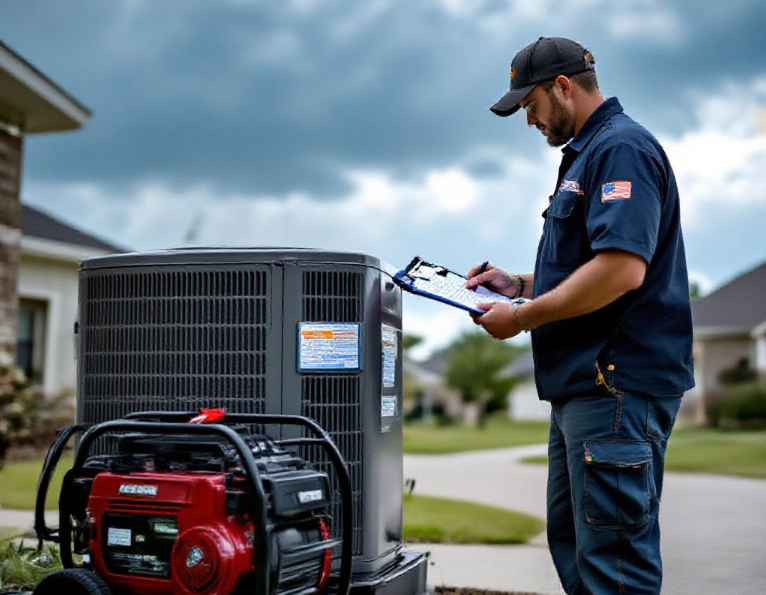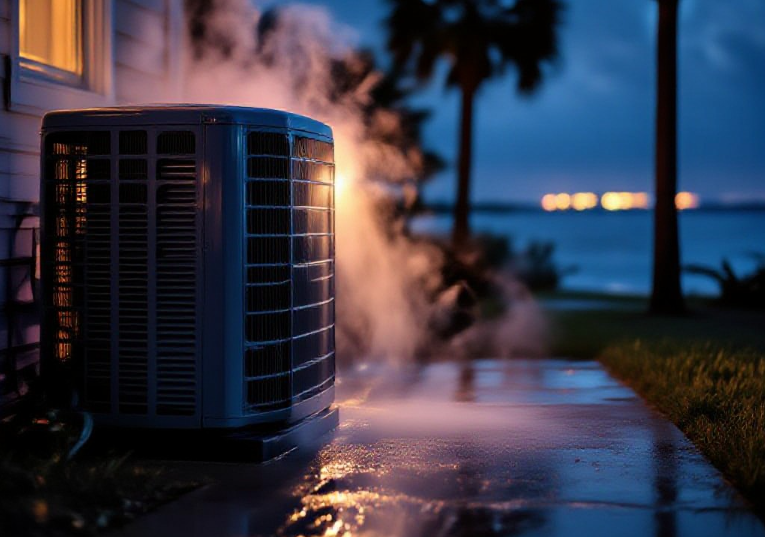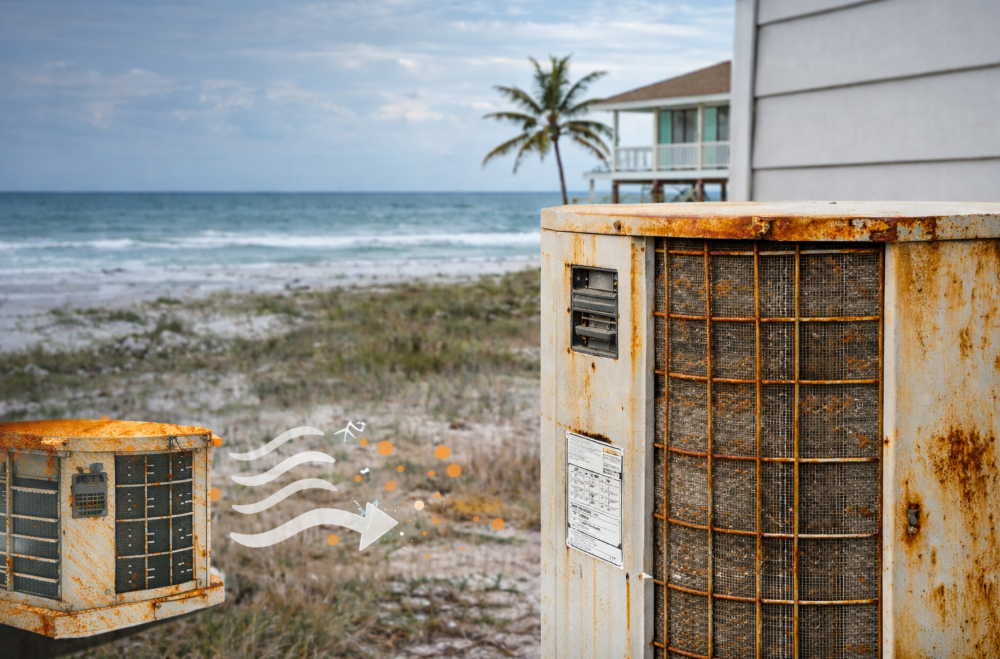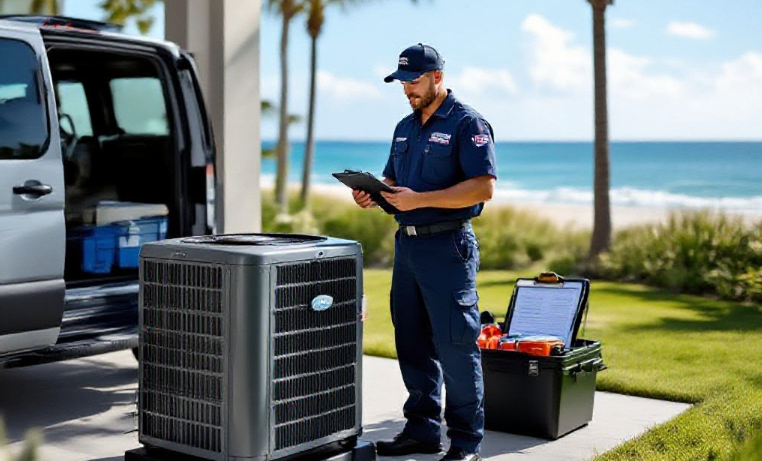
HVAC systems in coastal Texas require at least biannual servicing-before summer and winter-but your location’s high humidity, salt air, and extended cooling season often demand closer monitoring. Signs you need service include rising energy bills, uneven temperatures, and unusual noises or odors. During a professional visit technicians inspect, clean, and test coils, drain lines, and controls to prevent mold growth, clogs, and accelerated corrosion. Choose a local company like Alex’s Air Conditioning in La Marque, TX to ensure your system stays efficient and reliable year-round.
General HVAC Service Recommendations
You should plan for at least two professional tune-ups per year – typically spring and fall – but in coastal Texas the baseline often isn’t enough. High humidity and salt air mean you may need targeted checks more frequently, such as coil inspections and condensate-line cleanings every 3-4 months, and immediate checks after significant storms or heavy salt spray events. During each visit, a technician should inspect electrical connections, test refrigerant pressures, clean coils, flush the drain line, and verify airflow to maintain rated efficiency.
Pay attention to operational signs: rising energy bills, uneven temperatures, unusual odors, or new noises often indicate developing problems that get worse in the coastal environment. You should change disposable filters every 30-90 days depending on filter size, indoor air quality, and pets; use higher-efficiency pleated filters (MERV 8-11) if your system supports them. Local contractors like Alex’s Air Conditioning can recommend corrosion-resistant practices and service intervals tailored to La Marque’s salt-air exposure.
Recommended Service Intervals
Filter replacement: 30-90 days (30-60 days if you have pets or high humidity). Professional tune-ups: twice a year as a standard, with an added mid-season check every 3-4 months for coil condition and condensate drain performance in coastal locations. Post-storm inspections: within 1-2 weeks after tropical storms or sustained onshore salt events to look for debris, salt buildup, and moisture intrusion.
What technicians should do at each visit: measure static pressure and airflow, clean or chemically treat outdoor and indoor coils, check refrigerant charge and look for leaks, lubricate moving parts, verify thermostat calibration, and test safety switches. Small problems found during these inspections – a pinhole leak, a borderline capacitor, a partially blocked drain – are often corrected for a few hundred dollars versus thousands for a premature compressor replacement.
- Change filters every 30-90 days based on usage and filter type
- Schedule professional tune-ups twice yearly, plus a 3-4 month coastal inspection cycle
- Inspect condensate lines monthly during the humid season and after heavy storms
- Have coils professionally cleaned at least once a year, more often if salt buildup is visible
- Knowing that catching corrosion or refrigerant loss early preserves capacity and extends equipment life.
Maintenance Tips for Longevity
Keep the outdoor unit clear of vegetation and debris; maintain at least 24 inches of clearance and flush the condenser fins with fresh water every 1-2 months during the high-salt season to remove salt spray and airborne chloride. You should inspect the condensate pan and trap monthly for standing water or algae; a clogged pan or trap is a common mold source in high-humidity areas. Consider installing a UV-C lamp in the air handler to reduce microbial growth on coils and drain pans, and use anti-corrosion coil treatments if a local technician recommends them.
Seal and insulate refrigerant lines and check the condition of electrical contacts at each service – loose or corroded connections increase amperage draw and shorten motor life. You can also extend system life by running a programmable thermostat to avoid long, inefficient continuous cycles and by keeping ductwork sealed and insulated; poorly sealed ducts in coastal homes can introduce humid air and salt into the system, accelerating wear.
Monthly homeowner checklist: replace or clean filters, visually inspect the outdoor unit for corrosion or debris, verify condensate drain is flowing, and listen for new noises during startup and shutdown. During professional visits, ask the technician to record refrigerant pressures and motor amp draw so you build a trending history; trends reveal slow declines before failures occur and guide proactive replacements.
- Replace or clean filters every 30-90 days and document filter type and dates
- Flush the outdoor coil with fresh water regularly and schedule professional coil cleanings annually or sooner if salt buildup returns
- Inspect and clear the condensate drain monthly during humid months and install a secondary safety switch if you have frequent clogs
- Track refrigerant pressures and motor amperage at each service to spot gradual declines
- Knowing proactive, documented maintenance reduces unplanned failures and keeps system efficiency closer to the original SEER rating.
Why Coastal Texas HVAC Systems Need More Attention
High summer humidity in coastal Texas commonly averages 70-80% and your system runs far longer than in inland climates-typical cooling seasons stretch from April through October, meaning seven or more months of heavy duty. That extended runtime plus constant moisture accelerates wear on compressors, motors, and belts, and drives up your energy use if coils and filters aren’t maintained on a tighter schedule.
Your proximity to the Gulf matters: salt-laden air within roughly 10-20 miles of the coast speeds corrosion on outdoor coils, fins, and electrical connections, so the twice-a-year service many technicians recommend for inland homes often isn’t enough. You should plan for more frequent checks-filter changes every 1-3 months, mid-season inspections, and targeted cleanings-to avoid common coastal failures like blocked condensate lines, degraded coil performance, and premature component replacement.
Unique Climate Challenges
You’ll see longer run cycles during heat waves-8-12 hours a day isn’t unusual-which compounds normal wear and shortens component life. That repetitive cycling increases the chance of compressor strain, fan motor fatigue, and refrigerant leaks; technicians in La Marque commonly find systems with reduced airflow and hardened lubricant seals after just a few seasons of heavy use.
You also face simultaneous stressors: humidity that promotes biological growth inside the evaporator and drain systems, plus airborne salt that deposits on outdoor fins and connectors. Practical examples include condensate pans that accumulate biofilm within weeks, condensate lines that clog and overflow, and outdoor coils that pit and lose efficiency unless they’re rinsed and treated regularly.
Impact of Humidity and Salt Air
Humidity creates persistent moisture on evaporator coils and drain pans, so you’re more likely to get mold, mildew, and bacterial growth that reduce indoor air quality and block condensate drains; in high-humidity spells microbial colonies can establish in as little as 1-4 weeks on damp surfaces. During service visits, insist your technician inspect and flush the condensate drain, clean the evaporator coil, and apply an appropriate antimicrobial treatment when needed.
Salt air deposits fast-drying chloride residues on outdoor coils, fan motors, and electrical terminals, which leads to pitting, electrical arcing, and corrosion-related refrigerant leaks over time. To protect your equipment you should have outdoor coils rinsed after storm events, consider coils with factory-applied corrosion-resistant coatings, and ask for anti-corrosion treatments on vulnerable fasteners and terminals during routine maintenance.
For practical maintenance: schedule coil rinses and condensate inspections at least twice during the long cooling season, change filters monthly when humidity spikes, and have a technician apply protective coatings or replace corroded components before small corrosion issues become system‑level failures.
Signs Your HVAC System Needs Service Now
If your energy bills jump noticeably – say 10% or more compared with the same month last year – your system is likely working harder than it should because of dirty coils, clogged filters, or low refrigerant. You should also watch for longer run times, frequent on/off cycling, ice buildup on evaporator coils, and systems that trip breakers; those symptoms point to airflow restrictions, electrical stress, or failing components that worsen quickly in coastal conditions where salt and humidity speed corrosion and biological growth.
Because coastal humidity often exceeds 70% in summer and salt air accelerates coil corrosion, you need to act faster than inland homeowners when you see these signs. Technicians will inspect drain lines for clogs and mold, check for refrigerant leaks, clean condenser and evaporator coils, and test capacitors and motors – services that can restore 10-20% of lost efficiency in many cases and prevent premature compressor failure.
Common signs and what they mean
| Rising energy bills | Dirty coils/filters or low refrigerant – schedule a tune-up and leak check |
| Uneven temperatures | Duct leaks, thermostat issues, or weakened airflow – inspect ducts and controls |
| Unusual noises or odors | Loose parts, failing motor bearings, refrigerant leaks, or mold – shut off if burning/electrical smell and call a tech |
| Frequent short cycling | Oversized unit, refrigerant problems, or electrical faults – needs diagnostic testing |
| Visible corrosion or salt buildup | Accelerated wear on coils and connections – professional cleaning and protective measures required |
Unusual Noises and Odors
If you hear screeching or grinding, you’re likely listening to worn motor bearings, a failing blower wheel, or a slipping belt; those sounds often precede motor failure and should prompt same-week service. Banging or clanking typically means a loose fan blade or debris in the outdoor unit and can damage the compressor if ignored; hissing often indicates a refrigerant leak and requires immediate attention because low refrigerant reduces cooling capacity and can damage the compressor.
A musty or moldy smell usually points to pooled water in the condensate pan, clogged drain lines, or moldy ductwork – conditions that are common in coastal homes with high humidity and can aggravate allergies. Detecting a burning or electrical smell is a safety issue: turn off the system at the breaker and call a technician right away, since wiring faults and failing capacitors can cause fires.
Noises and odors: likely causes and immediate actions
| Screeching/grinding | Worn bearings or belt – schedule motor/blower inspection |
| Banging or clanking | Loose parts or debris in fan – turn off if severe and call for repair |
| Hissing | Possible refrigerant leak – shut off the unit and get a leak test |
| Musty odor | Mold or standing water in drain pan/ducts – service drain line and clean ducts |
| Burning/electrical smell | Electrical fault – power down and contact a professional immediately |
Inconsistent Temperature Control
If rooms in your home vary more than 3-5°F from the thermostat setting or the system runs much longer than it used to, you have a performance problem that often stems from restricted airflow, dirty evaporator coils, low refrigerant, or duct leakage. Coastal humidity compounds the issue by making the system work harder to remove moisture; when coils are fouled by salt or biofilm, heat transfer drops and your system cycles longer to reach setpoints.
Thermostat problems are another common culprit: a miscalibrated or poorly located thermostat (near a sunlit window or a vent) will give incorrect readings and cause uneven comfort. You can check room-to-room variance with a simple $10 room thermometer – consistent discrepancies greater than 5°F warrant a professional duct and thermostat evaluation.
For a technical check you can request from a tech, measure the supply-to-return temperature difference (delta‑T) across the evaporator: a healthy split system typically shows about 15-20°F. If delta‑T falls below ~10°F, expect low refrigerant, dirty coils, or insufficient airflow; if it exceeds 25°F, airflow problems or incorrect system charge may be present.
Temperature inconsistency: symptoms and checks
| Room-to-room variance >5°F | Leaky/blocked ducts, insulation gaps, or zoning issues – inspect and seal ducts, balance airflow |
| Low delta‑T (<10°F) | Dirty coils, low refrigerant, or weak airflow – clean coils, check charge, replace filters |
| System runs constantly but won’t cool | Undersized unit, refrigerant leak, or blocked condenser – conduct performance and leak tests |
| Thermostat reads differently than room thermometer | Thermostat placement or calibration issue – relocate or recalibrate/replace thermostat |
What Happens During a Professional HVAC Service
Technicians run a step-by-step inspection and performance check that goes well beyond a quick filter swap: they measure refrigerant pressures and superheat/subcooling, record compressor and fan motor amp draw against nameplate values, verify airflow (typically 350-450 CFM per ton as a target), and test thermostat calibration to within ±1°F. You’ll see condensate lines flushed, coils inspected and cleaned, electrical connections tightened, and safety controls tested so the system operates safely and efficiently under La Marque’s high humidity and salt-air conditions.
Every service visit should end with documented findings and recommendations: photos of corroded fins or blocked drains, measured values (PSI, amps, CFM), and an itemized list of repairs or parts to watch. You can expect the technician to flag accelerated corrosion on outdoor coils, any refrigerant leaks detected with an electronic leak detector, and mold or biofilm in the drain pan-issues that, if left unaddressed, drive up energy use and reduce equipment life.
Comprehensive System Check
Technicians start with a visual and operational audit: inspect the outdoor condensing coil and fins for salt corrosion, check the evaporator coil for dirt or mold, and remove access panels to examine electrical components, capacitors, contactors, and blower assembly. They’ll measure refrigerant pressures and calculate superheat/subcooling to confirm the charge is within manufacturer specs, and use a clamp meter to compare running amps to nameplate ratings so you catch failing motors before they fail.
Airflow and distribution are tested next-static pressure readings, return and supply temperatures, and spot measurements of CFM at registers help identify duct leaks or blocked returns that cause hot/cold rooms. For gas furnaces or heat pumps, ignition systems, flame sensors, and heat exchangers get inspected for cracks or soot buildup; technicians also verify thermostat set-points and controls to ensure the system cycles correctly throughout La Marque’s long cooling season.
Common Maintenance Procedures
Filter replacement is the most frequent task: disposable 1-4″ filters are inspected and typically changed anywhere from every 30 to 90 days depending on MERV rating and coastal humidity-many coastal homes need changes closer to 30-60 days. Coil cleaning follows, using a foaming coil cleaner and a low-pressure rinse on the condenser to remove salt and grime that reduce heat transfer by 10-20% or more when heavily fouled.
Technicians also clear and treat condensate drains (often running an enzyme or bleach treatment and verifying a free-flowing PVC trap), lubricate fan and blower bearings where serviceable, tighten electrical terminals, and swap worn capacitors or contactors before they cause compressor or motor failures. You’ll frequently see belts checked for wear and tensioned or replaced, and refrigerant lines inspected and insulated to minimize sweat and corrosion.
Additional specifics: capacitors commonly degrade after 7-10 years and show voltage droop under load, so a technician may bench-test them and replace marginal units; a clogged condensate drain can raise indoor humidity and trigger overflow switches within days in coastal humidity, so annual flushing is standard and post-storm inspections are recommended. Local providers like Alex’s Air Conditioning document these items so you can track trends-when amperage creeps up or static pressure rises, it’s a clear sign to schedule follow-up repairs.
Why Local Experience Matters
Understanding Coastal Conditions
You’ll notice salt-laden air and high humidity create different failure modes than inland systems-coil fins pit faster, electrical contacts corrode more quickly, and condensate drains clog from persistent moisture and biological growth. In coastal Texas the cooling season often stretches 8-10 months, so your system runs longer and accumulates wear; most pros still recommend biannual service, but homes within a mile of the Gulf commonly benefit from quarterly checks to catch corrosion and moisture-related problems before they force expensive component replacements.
Technicians with coastal experience use targeted diagnostics and treatments: routine coil and fin decontamination, application of corrosion inhibitors or factory-approved protective coatings, and closer attention to condensate pans and drain traps to prevent mold and water damage. You’ll get different priorities from a local crew-tightening outdoor electrical connections, verifying cabinet seals, and testing humidity control strategies-measures that directly reduce premature failures and improve seasonal comfort.
Building Relationships with Local Technicians
When you establish an ongoing relationship with a local HVAC company, they build a history of your system’s performance and recurring issues, which lets them tailor maintenance intervals and parts recommendations to your exact situation. Expect advantages like priority scheduling after storms, consolidated service records that simplify warranty and insurance claims, and technicians who can spot patterns-such as duct leakage tied to hurricane straps or salt exposure concentrated on one side of the unit-that a one-off visit would miss.
Local techs also guide practical upgrades that address coastal realities: recommending corrosion-resistant coils, variable-speed blowers to handle long run times more efficiently, and humidistat-controlled strategies to limit mold growth. You can save energy and extend equipment life-proper tuning and targeted upgrades commonly reduce energy use by roughly 10-20%-and local contractors know which models and coatings hold up best in La Marque and nearby Gulf communities.
To build that relationship, have your technician document each visit with photos and a checklist, sign a planned maintenance agreement that guarantees seasonal visits and response times, and ask them to track parts replacement dates so you don’t get surprised by end-of-life failures; a consistent provider like Alex’s Air Conditioning will use this continuity to proactively replace at-risk components and keep your system running dependably year-round.
To wrap up
Presently you should service your HVAC system in coastal Texas at least twice a year-once before the heavy cooling season and once before winter-but coastal humidity, salt air, and longer run times often justify more frequent inspections to prevent corrosion, clogged drain lines, and mold issues. You should monitor for rising energy bills, uneven temperatures, unusual noises or odors, and visible moisture; any of these signs means you should schedule service sooner.
You should work with a local company that knows the coastal climate so your system receives targeted inspections, coil and drain cleaning, and corrosion control; if you’re in La Marque or nearby, Alex’s Air Conditioning understands how salt and humidity affect equipment and can help keep your system running efficiently year-round.
FAQ
Q: How often should I schedule HVAC service in Coastal Texas?
A: At minimum, schedule service twice a year-once before the heavy cooling season and once before any heating needs-but coastal conditions often warrant more frequent checks. For homes within a few miles of the coast or systems showing early wear, quarterly inspections or a mid-season check can catch salt-related corrosion, humidity-driven issues, and excessive wear from long run times.
Q: What coastal factors make more frequent servicing necessary?
A: High humidity encourages mold growth and clogged condensate drains; salt air accelerates corrosion on coils, fins, and electrical connections; and extended cooling seasons increase compressor and fan runtime. Those combined stresses shorten component life and reduce efficiency, so technicians must clean, protect, and test parts more often than in inland climates.
Q: What signs indicate my HVAC needs service sooner than scheduled?
A: Call for service if you notice rising energy bills, uneven temperatures, reduced airflow, unusual noises or burning/musty odors, frequent short cycling, visible corrosion or salt buildup, or water leaks from the condensate line. Any of these symptoms can signal refrigerant loss, failing components, blocked drains, or corrosion that worsens quickly in coastal air.
Q: What does a professional coastal HVAC service include?
A: A thorough service inspects and cleans evaporator and condenser coils, checks refrigerant levels, clears and tests condensate drains and pumps, inspects electrical connections and controls for corrosion, lubricates moving parts, replaces or inspects filters, verifies thermostat calibration and airflow, and looks for salt damage. Technicians may also apply corrosion inhibitors, recommend coil replacement or protective coatings, and provide a written maintenance checklist.
Q: How should I choose a local HVAC company in La Marque, TX?
A: Select a licensed, insured provider with local coastal experience, positive reviews, and technicians certified in HVAC service. Ask about coastal-specific services such as corrosion protection, seasonal maintenance plans, emergency response, and a clear written scope and pricing. Alex’s Air Conditioning understands La Marque’s coastal climate and offers tailored maintenance plans and inspections to keep systems performing year-round.