If you’ve ever sneezed your way through allergy season or noticed dust piling up just days after cleaning, you’ve probably wondered if your home’s air is as clean as it feels. With more time spent indoors—especially during Texas summers—air quality isn’t just about comfort anymore; it’s about health.
Two of the most common solutions homeowners turn to are air filtration systems and air purifiers. Though often used interchangeably, they’re not the same thing. Both improve indoor air quality, but they do so in different ways, targeting different types of pollutants.
In this article, we’ll clear the air (pun intended) on what sets filtration and purification apart, how each system works, and how to decide which one your home truly needs.
Why Indoor Air Quality Matters—Especially in Texas
Let’s start with the “why.”
Texas homes face unique air quality challenges: high humidity, frequent dust and pollen, and increasingly long cooling seasons that keep HVAC systems running nonstop. Add in outdoor air pollution from nearby highways or refineries, and you have a recipe for poor indoor air.
According to the EPA, indoor air can be up to five times more polluted than outdoor air. That’s because once contaminants enter your home—through open doors, duct leaks, or on your clothing—they tend to stay trapped unless actively filtered or neutralized.
Poor indoor air quality can contribute to:
Allergy flare-ups
Asthma and respiratory irritation
Headaches and fatigue
Mold growth due to excess humidity
That’s where air filtration and purification systems come in—each tackling different sources of the problem.
What Is Air Filtration?
Air filtration is your HVAC system’s first line of defense against airborne particles. Every time your system cycles air, it passes through a filter, which captures particles like dust, pollen, lint, and pet dander before air circulates back into your home.
How Air Filtration Works
Air filters act like a sieve for your HVAC system. As air passes through the filter media—often made of fiberglass, pleated paper, or synthetic fibers—solid particles get trapped.
The efficiency of a filter is measured by its MERV rating (Minimum Efficiency Reporting Value), which ranges from 1 to 16:
MERV 1–4: Basic filters that capture large dust and lint particles.
MERV 5–8: Standard residential filters—catching mold spores and pet dander.
MERV 9–12: High-performance filters suitable for allergy sufferers.
MERV 13–16: Hospital-grade filtration, removing even bacteria and smoke.
Most Texas homes use filters rated between MERV 8 and 12, balancing airflow with effective filtration.
Benefits of Air Filtration
Protects your HVAC system: Keeps coils and ducts clean, improving efficiency.
Reduces dust buildup: Keeps furniture and surfaces cleaner longer.
Improves breathing comfort: Reduces larger airborne allergens like pollen and hair.
Low maintenance: Just replace filters every 1–3 months depending on type and usage.
But while filters are great for capturing particles, they don’t actually destroy biological contaminants. That’s where purification comes in.
What Is Air Purification?
Air purifiers go beyond filtering—they’re designed to neutralize or remove microscopic contaminants, such as bacteria, viruses, mold spores, smoke particles, and volatile organic compounds (VOCs).
Unlike basic filtration, purification systems use advanced technologies to sanitize the air rather than just trap pollutants.
Types of Air Purification Systems
UV-C Light Purifiers
These use ultraviolet light to kill microorganisms by disrupting their DNA. Commonly installed within the HVAC system, UV purifiers are effective against bacteria, viruses, and mold growth on coils or in ducts.Ionizers (Ionization Purifiers)
These release charged ions into the air that bind with particles, causing them to clump and fall out of the air or stick to surfaces for easier cleaning.Activated Carbon Filters
These target gases and odors—like cigarette smoke, paint fumes, or cooking smells—by absorbing them into a porous carbon surface.HEPA Purifiers (High Efficiency Particulate Air)
HEPA filters capture 99.97% of particles as small as 0.3 microns—great for allergy relief and ultra-clean air. However, most traditional HVAC systems can’t accommodate HEPA filters without airflow modifications.
Air Filtration vs. Air Purification: The Key Differences
| Feature | Air Filtration | Air Purification |
|---|---|---|
| Primary Function | Captures particles | Neutralizes or removes microscopic contaminants |
| Targets | Dust, pollen, dander | Bacteria, viruses, VOCs, odors |
| Technology Used | Physical filter (fiberglass, pleated, etc.) | UV-C light, ionization, or carbon |
| Placement | HVAC return vent or filter slot | Inline with HVAC or standalone unit |
| Maintenance | Replace filters regularly | Replace bulbs or filters, periodic cleaning |
| Best For | Routine air quality maintenance | Allergy, asthma, or odor concerns |
The best indoor air strategy often combines both filtration and purification—especially in Texas, where high humidity and seasonal allergens collide.
Why Texas Homes Benefit from a Dual System
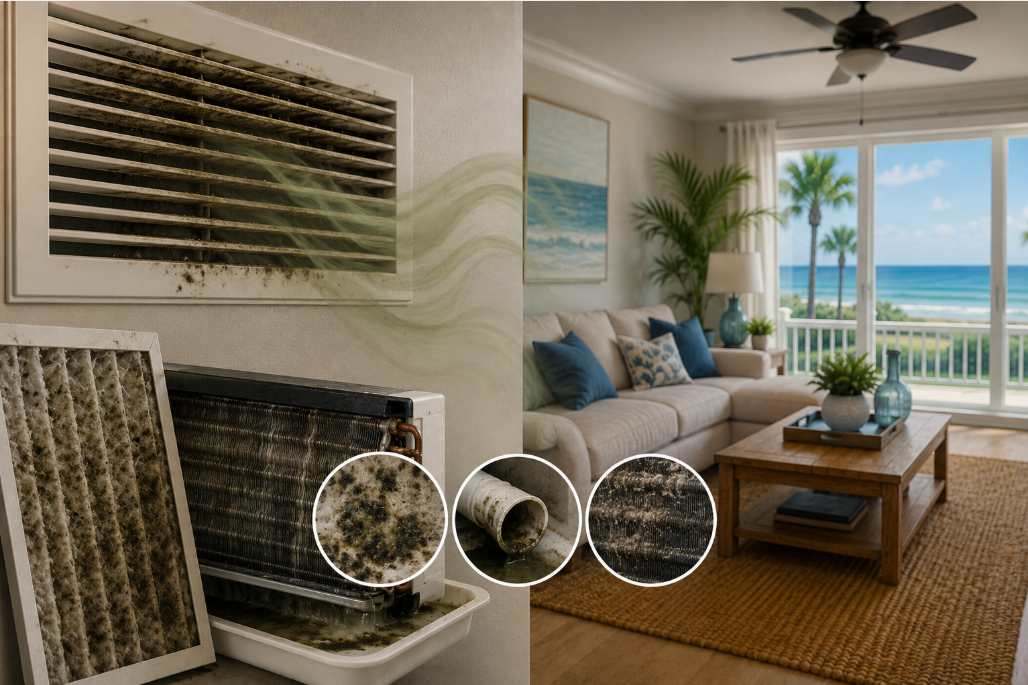
In the Gulf Coast and Greater Houston areas, humidity control and allergen management are key to comfort. A standard filter might catch dust, but mold spores and bacteria thrive in moist air—especially around AC coils or inside ductwork.
That’s why many homeowners install a UV-C purifier alongside a high-MERV filter. The filter traps larger particles while the UV light sterilizes microbial growth and prevents it from spreading.
Combining both systems:
Reduces allergens and odors
Improves HVAC efficiency
Extends system lifespan
Keeps ducts cleaner for longer
For example, if your home often smells musty after running the AC, you might not just have dirty filters—you could have microbial buildup in the evaporator coil. A UV-C air purifier, professionally installed, can eliminate that issue at the source.
Learn more about improving indoor air quality with Alex’s Air Conditioning.
How to Tell Which System You Need
It depends on your main air quality concern:
If your home gets dusty quickly: Start with a high-quality air filter (MERV 10–12).
If you suffer from allergies or asthma: Add a HEPA or UV air purifier.
If your home smells musty or smoky: Use a system with activated carbon or ionization.
If your air feels humid or sticky: Combine purification with humidity control (a dehumidifier or whole-home system).
If you’re unsure, scheduling an indoor air quality assessment can help identify the right combination for your home.
Contact Alex’s Air Conditioning to schedule a consultation.
Maintenance: Keeping Your Air Clean All Year Long
Even the best systems need upkeep. A clogged filter or old UV bulb can make a world of difference in performance.
Here’s how to stay on top of it:
Replace HVAC filters every 1–3 months.
Have your ducts inspected annually.
Clean or replace UV bulbs every 12 months.
Schedule a professional air quality test once a year.
By maintaining your air system, you’re not just keeping the air cleaner—you’re ensuring your HVAC system runs efficiently and lasts longer.
The Bottom Line: Clean Air Starts with the Right System
Air filtration and air purification both play vital roles in maintaining a healthy, comfortable home environment.
Think of it this way:
Filtration is your defensive shield—keeping dust and allergens out.
Purification is your offensive strategy—neutralizing the invisible threats that slip through.
When you combine both, you’re not just breathing easier—you’re protecting your investment in your home and your family’s well-being.
If you’re ready to breathe cleaner, healthier air in your Texas home, Alex’s Air Conditioning can help you choose, install, and maintain the best system for your needs.