Introduction: The Silent Challenge of Indoor Air in Texas Homes
For many homeowners in Texas, the focus on home comfort often centers on temperature control and energy efficiency, but what often goes unnoticed is the quality of the air inside the home. Indoor air quality (IAQ) significantly impacts health, comfort, and even the performance of your HVAC system. In humid regions like La Marque and along the Gulf Coast, the combination of heat, moisture, and environmental allergens makes IAQ a critical factor for well-being.
Research by the U.S. Environmental Protection Agency (EPA) indicates that indoor air can be two to five times more polluted than outdoor air, particularly in tightly sealed homes where ventilation is limited. Pollutants can accumulate silently, leading to respiratory irritation, fatigue, and long-term health issues, all while reducing the efficiency and lifespan of HVAC equipment.
This article delves into the causes of poor IAQ, explores the hidden impacts it has on health and home systems, and provides practical, expert-driven solutions to improve the air you breathe.
Understanding Indoor Air Quality and Its Importance
Indoor air quality encompasses more than just temperature and airflow; it refers to the overall condition of the air within a home, including the presence of pollutants, humidity, and airborne microbes. Homes with high IAQ maintain a balance where air is free from harmful particulates, chemical compounds, and excessive moisture, providing a healthy environment for residents.
In Texas homes, poor IAQ often goes unnoticed until symptoms appear. These can range from mild discomfort, such as dry eyes or throat irritation, to chronic issues like respiratory inflammation or severe allergic reactions. Furthermore, indoor pollutants can affect HVAC system performance by causing filters to clog more quickly, ducts to accumulate dust, and coils to degrade, ultimately reducing efficiency and increasing energy costs.
Common Sources of Poor Indoor Air Quality in Texas Homes
The causes of poor indoor air quality are varied, but in Texas homes, several key factors are particularly significant. Humidity, construction materials, lifestyle factors, and HVAC system condition all play a role.
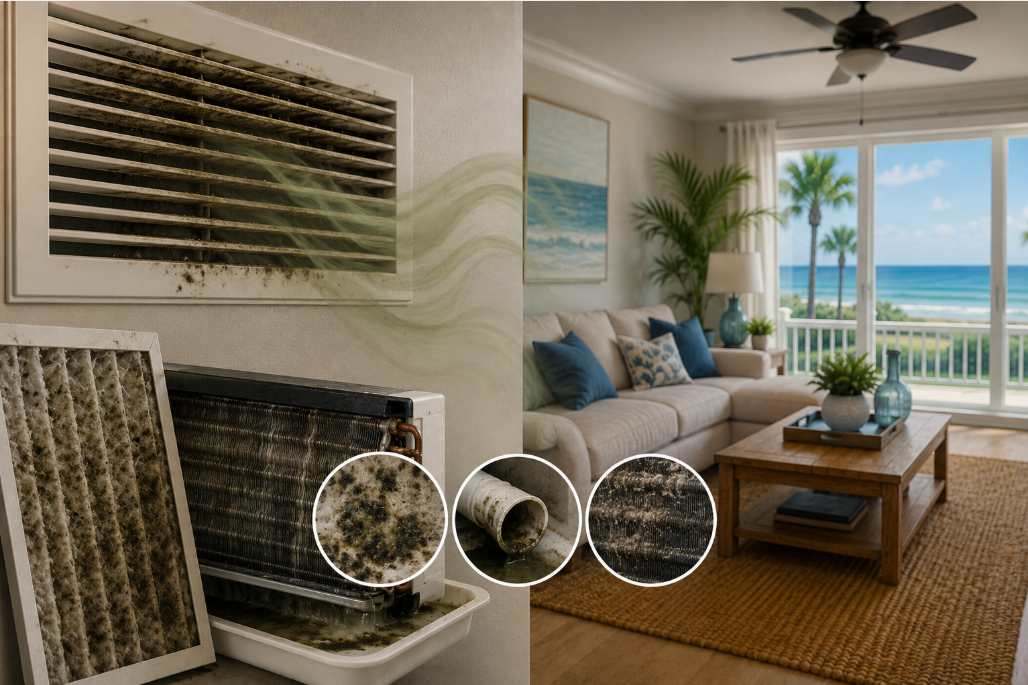
Biological contaminants such as mold spores, bacteria, and dust mites thrive in humid environments. Moisture accumulation on ductwork, coils, or poorly insulated surfaces creates a perfect breeding ground for these microbes. When these organisms proliferate, they release allergens into the air that can aggravate asthma, allergies, and other respiratory conditions.
Particulate matter, including dust, pollen, and pet dander, is another primary contributor to indoor air problems. Fine particles like PM2.5 and PM10 can penetrate deep into the lungs, causing irritation and long-term health effects. In homes where ventilation is limited, particulate accumulation can occur rapidly, particularly during periods of heavy outdoor pollen or dust intrusion. The American Lung Association provides extensive guidance on understanding and mitigating particulate exposure.
Volatile organic compounds (VOCs) are another often overlooked source of indoor pollution. These chemicals are emitted from everyday products like paints, adhesives, cleaning agents, carpets, and furniture. VOCs can cause headaches, nausea, and eye irritation in the short term and may lead to long-term neurological or respiratory effects. For homeowners concerned about VOC exposure, the EPA provides a detailed guide on sources and mitigation strategies.
Combustion byproducts, including carbon monoxide (CO) and nitrogen dioxide (NO2), are released from fuel-burning appliances such as gas stoves, water heaters, and furnaces. Inadequate venting or leaks can allow these gases to accumulate indoors, posing serious safety hazards.
Excess moisture, whether from high humidity, condensation, or leaks, can lead to microbial growth and mold proliferation. Musty odors, damp surfaces, and visible mold patches are clear indicators, but even hidden moisture can degrade air quality over time.
The Hidden Impacts on Health, Comfort, and Home Systems
The consequences of poor indoor air quality extend far beyond minor discomfort. Residents may experience frequent headaches, fatigue, irritation of the eyes, nose, and throat, and increased allergy symptoms. For children, the elderly, or individuals with preexisting respiratory conditions, prolonged exposure can have serious long-term health implications, including chronic respiratory inflammation and cardiovascular stress.
Poor IAQ also impacts the efficiency and lifespan of HVAC systems. Dust and biological growth on coils and fan blades reduce heat exchange and airflow, forcing the system to work harder to maintain comfort. Leaky or unbalanced ductwork can circulate dust and allergens throughout the home rather than removing them, leading to increased energy consumption and more frequent equipment maintenance. Homes with inadequate air quality management may see energy bills rise by 10–30%, even when their HVAC system is well-maintained.
Indoor comfort is further compromised by poor IAQ. Homeowners may perceive air as “stale,” notice persistent odors, or find that certain areas feel cooler or warmer due to airflow inconsistencies caused by dirty or leaky ducts. Over time, mold or microbial growth can damage insulation, structural components, and even the HVAC system itself, making remediation increasingly costly.
Diagnosing Indoor Air Quality Issues
A comprehensive IAQ assessment is crucial for identifying the sources of poor indoor air. This involves a combination of professional inspection, measurements, and system evaluation. A technician may start with a visual inspection to identify mold, leaks, or dust accumulation. Humidity and temperature monitoring across multiple zones reveals areas of excessive moisture or insufficient airflow.
Airflow testing ensures that HVAC ducts and vents are balanced and delivering air efficiently, while particulate and VOC testing identifies harmful airborne chemicals and allergens. Carbon monoxide and other combustion gases are also measured near appliances to ensure safety. Collecting baseline data allows homeowners and professionals to design effective, targeted interventions.
At Alex’s Air, technicians perform full IAQ assessments to determine the most effective solutions for each home. By combining diagnostic data with expert knowledge, homeowners can address the root causes of indoor air problems rather than applying temporary or ineffective fixes.
Schedule a professional IAQ assessment
Solutions to Improve Indoor Air Quality in Texas Homes
Addressing indoor air quality requires a comprehensive approach that integrates source control, ventilation, filtration, humidity management, and proper system maintenance.
Controlling Pollutants at the Source
Reducing pollutants at their origin is the first step. This includes using low-VOC paints and materials, properly venting appliances, and repairing leaks or drainage issues promptly. By preventing pollutants from entering the air, homeowners can significantly improve overall air quality. For more guidance on the benefits of controlling pollutants and maintaining healthy indoor air, see Importance of Optimizing Indoor Air Quality.
Enhancing Ventilation and Airflow
Effective ventilation brings fresh air into the home while removing stale air and contaminants. Energy Recovery Ventilators (ERVs) and Heat Recovery Ventilators (HRVs) are highly effective in exchanging indoor and outdoor air while conserving energy. Additionally, kitchen and bathroom exhaust fans help remove moisture and odors, improving comfort and reducing microbial growth. Ventilation strategies should follow ASHRAE Standard 62.2 for residential air exchange.
Advanced Filtration and Air Purification
Upgrading filtration is essential for capturing fine particles and reducing exposure to allergens. MERV 13 or higher filters can trap microscopic dust, pollen, and other contaminants. For homes with significant IAQ challenges, in-duct UV-C lights or whole-home air purifiers such as Carrier Infinity Air Purifiers can neutralize microbes and VOCs. Even standalone HEPA units provide effective localized air cleaning for bedrooms, offices, or living spaces. Integrating these solutions into regular HVAC maintenance ensures optimal performance. For practical tips on combining filtration with system upkeep, see AC Maintenance Checklist for La Marque Homeowners.
Managing Humidity and Moisture
Maintaining 40–55% relative humidity is critical for comfort and microbial control. Homes may require whole-house or portable dehumidifiers, particularly in coastal regions where humidity is naturally high. Proper insulation of ducts and careful moisture management prevents condensation and mold formation. Homeowners should also inspect plumbing, roofing, and crawlspaces regularly. For guidance on evaluating your system’s readiness, see Is It Time to Replace Your Old AC?.
Ductwork: Sealing, Cleaning, and Balancing
Ductwork is central to air distribution and IAQ. Leaks or poor airflow can allow dust, allergens, and microbial particles to circulate throughout the home. Sealing ducts with UL-rated mastic or foil tape, cleaning them when contamination is present, and balancing airflow are key strategies. Proper duct design and maintenance ensure consistent comfort, reduced energy costs, and improved indoor air quality. Learn more about recognizing HVAC issues before they worsen: Top 5 Signs Your AC Needs Repair Before the Texas Heat Hits.
Professional IAQ Services: Why Expertise Matters
Addressing indoor air quality comprehensively often requires professional guidance. HVAC providers like Alex’s Air offer expertise in diagnosing IAQ issues, recommending integrated solutions, and installing specialized equipment. Professional services ensure compliance with EPA and ASHRAE standards, improve home comfort, reduce energy costs, and extend system lifespan. Homeowners benefit from documented improvements and peace of mind knowing that the solutions are scientifically grounded and effectively implemented.
Contact Alex’s Air
Conclusion: Prioritize the Air You Breathe
Poor indoor air quality is a silent but significant threat to Texas homeowners. Beyond discomfort and health risks, it impacts HVAC efficiency, energy costs, and long-term system reliability. By taking a comprehensive, proactive approach — combining source control, ventilation, filtration, humidity management, and expert maintenance — homeowners can protect both their families and their investments.
Addressing IAQ is not a one-time project but an ongoing process that pays dividends in comfort, health, and cost savings. Schedule a professional assessment today to ensure your home’s air is as clean, healthy, and safe as it should be.